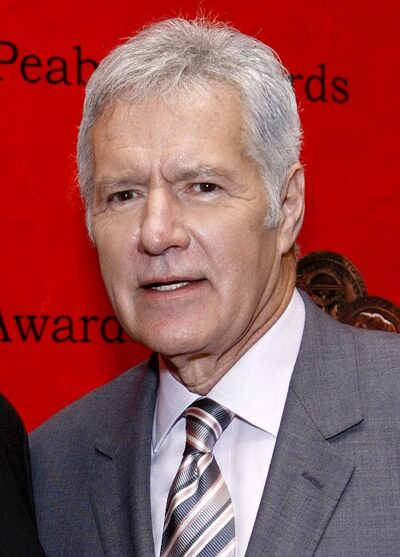
Lifetime Achievement Emmy
Lifetime Achievement Emmy is an Award for work in television. It is given by the National Academy of Television Arts and Sciences.
- Country
- United States
All 4 facts, and where they come from
Facts
4 facts · 0 confirmed by two sources · 0 cited · 4 from one source
Where this comes from
Papalocal keeps its own record. It started from these sources; what each one said is kept here as it was copied, so a change on their side never changes this page by itself. Tap one to read its version.
What Wikidata says · copied November 17, 2026 · revision 2503132877
- Described as
- Award for work in television
- What it is
- class of award; Emmy Award
- Country
- United States
- Given by
- National Academy of Television Arts and Sciences
- Wikipedias with a page
- 2
Wikidata item Q96387464 (wikidata.org/wiki/Q96387464), public domain (CC0). Copied 2026-11-17.
What Wikipedia says · copied November 17, 2026 · revision 1375061316
The Lifetime Achievement Emmys are a class of Emmy Awards presented in recognition of the significant lifetime achievements of an individual in the American television industry. They are analogous to other awards based on cumulative achievement presented in the United States in the context of numerous career fields.
Winners who have been presented the Lifetime Achievement Emmy in the context of the News and Documentary Emmys, noted for their journalistic efforts, include Larry King, Ted Koppel, Andrea Mitchell, and Barbara Walters.
Notable instances involving the award include when performer Fred Rogers, known for his works on children's programs such as Mister Rogers' Neighborhood, accepted his Lifetime Achievement Award at the 24th Daytime Emmy Awards in 1997, and successfully commanded the audience to give a moment of silence of commemorative thankfulness. Rogers additionally received a standing ovation before his comments, in which he told the crowd "may God be with you".
From the Wikipedia article “Lifetime Achievement Emmys” (en.wikipedia.org/wiki/Lifetime_Achievement_Emmys), by its contributors, under CC BY-SA 4.0 (creativecommons.org/licenses/by-sa/4.0/). Copied 2026-11-17; not changed.
Confirmed Two sources agree. Cited One source, and it names where it got it. One source One source, without a reference of its own. Sources disagree The sources disagree. We show the best-supported value and keep theirs below.