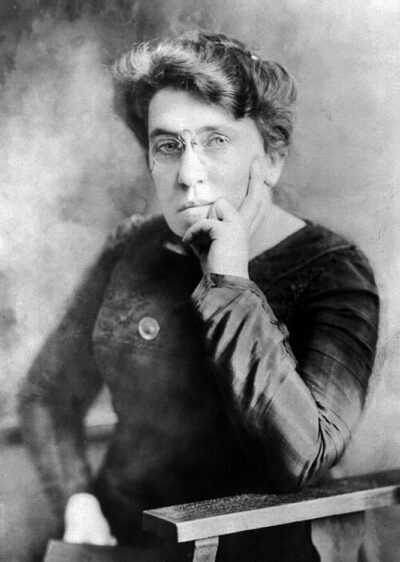
Living My Life
Living My Life is an autobiography of Lithuanian-born anarchist Emma Goldman. It came out in 1931.
- Published
- 1931
- Written by
- Emma Goldman
- Genre
- autobiography
- Country of origin
- United States
All 7 facts, and where they come from
Facts
7 facts · 0 confirmed by two sources · 0 cited · 7 from one source
Where this comes from
Papalocal keeps its own record. It started from these sources; what each one said is kept here as it was copied, so a change on their side never changes this page by itself. Tap one to read its version.
What Wikidata says · copied November 16, 2026 · revision 2530762872
- Described as
- autobiography of Lithuanian-born anarchist Emma Goldman
- What it is
- literary work
- Written by
- Emma Goldman
- Genre
- autobiography; political memoir
- Published
- 1931 · 1 reference
- Language
- English
- Country of origin
- United States · 1 reference
- Wikipedias with a page
- 8
Wikidata item Q3290152 (wikidata.org/wiki/Q3290152), public domain (CC0). Copied 2026-11-16.
What Wikipedia says · copied November 16, 2026 · revision 1384256984
Living My Life is the autobiography of Lithuanian-born anarchist Emma Goldman, who became internationally renowned as an activist based in the United States. It was published in two volumes in 1931 (Alfred A. Knopf) and 1934 (Garden City Publishing Company). Goldman wrote it while living in Saint-Tropez, France, following her disillusionment with the Bolshevik role in the Russian Revolution.
The text thoroughly covers her personal and political life from early childhood through to 1927. The book has constantly remained in print since, in original and abridged editions. Since the autobiography was published nine years before Goldman died in 1940, it does not record her role in the Spanish Civil War.
From the Wikipedia article “Living My Life” (en.wikipedia.org/wiki/Living_My_Life), by its contributors, under CC BY-SA 4.0 (creativecommons.org/licenses/by-sa/4.0/). Copied 2026-11-16; not changed.
Confirmed Two sources agree. Cited One source, and it names where it got it. One source One source, without a reference of its own. Sources disagree The sources disagree. We show the best-supported value and keep theirs below.