logarithmic spiral
Logarithmic spiral is a self-similar growth spiral whose curvature pattern appears frequently in nature.
All 1 facts, and where they come from
Facts
1 facts · 0 confirmed by two sources · 0 cited · 1 from one source
Where this comes from
Papalocal keeps its own record. It started from these sources; what each one said is kept here as it was copied, so a change on their side never changes this page by itself. Tap one to read its version.
What Wikidata says · copied November 17, 2026 · revision 2560282550
- Described as
- self-similar growth spiral whose curvature pattern appears frequently in nature
- What it is
- mathematical concept
- Wikipedias with a page
- 45
Wikidata item Q724944 (wikidata.org/wiki/Q724944), public domain (CC0). Copied 2026-11-17.
What Wikipedia says · copied November 17, 2026 · revision 1353854861
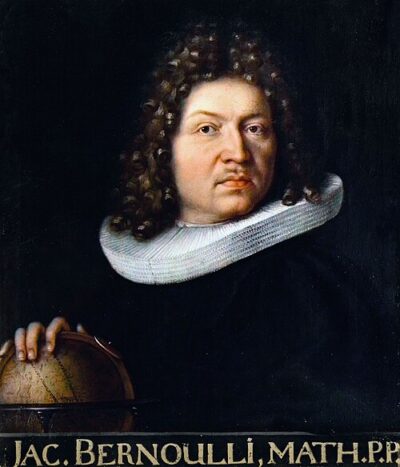
A logarithmic spiral, equiangular spiral, or growth spiral is a self-similar spiral curve that often appears in nature. The first to describe a logarithmic spiral was Albrecht Dürer (1525) who called it an "eternal line" ("ewige Linie"). More than a century later, the curve was discussed by Descartes (1638), and later extensively investigated by Jacob Bernoulli, who called it Spira mirabilis, "the marvelous spiral".
The logarithmic spiral is distinct from the Archimedean spiral in that the distances between the turnings of a logarithmic spiral increase in a geometric progression, whereas for an Archimedean spiral these distances are constant.
From the Wikipedia article “Logarithmic spiral” (en.wikipedia.org/wiki/Logarithmic_spiral), by its contributors, under CC BY-SA 4.0 (creativecommons.org/licenses/by-sa/4.0/). Copied 2026-11-17; not changed.
Confirmed Two sources agree. Cited One source, and it names where it got it. One source One source, without a reference of its own. Sources disagree The sources disagree. We show the best-supported value and keep theirs below.