Long-Term Capital Management
Long-Term Capital Management is an American hedge fund firm that collapsed in 1998. It was founded in 1994 by John Meriwether. Its headquarters are in Greenwich.
- Founded
- 1994
- Founded by
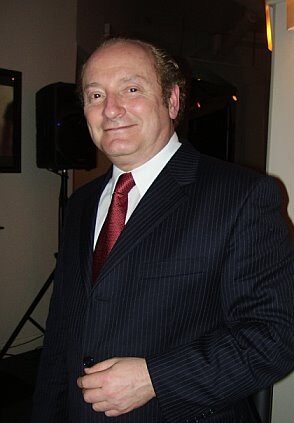
- John Meriwether
- Headquarters
- Greenwich
- Industry
- financial services
- Country
- United States
All 10 facts, and where they come from
Facts
10 facts · 0 confirmed by two sources · 0 cited · 10 from one source
Where this comes from
Papalocal keeps its own record. It started from these sources; what each one said is kept here as it was copied, so a change on their side never changes this page by itself. Tap one to read its version.
What Wikidata says · copied November 16, 2026 · revision 2482272077
- Described as
- American hedge fund firm that collapsed in 1998
- Other names
- Long-Term Capital Management L.P., LTCM
- What it is
- business; defunct organization; hedge fund firm
- Founded
- 1994
- Ended
- 2000
- Founded by
- John Meriwether
- Headquarters
- Greenwich
- Country
- United States
- Industry
- financial services; investment management
- Wikipedias with a page
- 20
Wikidata item Q1140654 (wikidata.org/wiki/Q1140654), public domain (CC0). Copied 2026-11-16.
What Wikipedia says · copied November 16, 2026 · revision 1383821097
Long-Term Capital Management L.P. (LTCM) was an American hedge fund which used highly leveraged strategies. In 1998 when LTCM was on the verge of collapse, the fund received a $3.6 billion bailout from a group of 14 banks, in a deal brokered and put together by the Federal Reserve Bank of New York, due to fears the collapse of LTCM would have disastrous effects on the larger financial system.
LTCM was founded in 1994 by John Meriwether, the former vice-chairman and head of bond trading at Salomon Brothers. Members of LTCM's board of directors included Myron Scholes and Robert C. Merton, who three years later in 1997 shared the Nobel Prize in Economics for having developed the Black–Scholes model of financial dynamics.
LTCM was initially successful, with annualized returns (after fees) of around 21% in its first year, 43% in its second year and 41% in its third year. However, in 1998 it lost $4.6 billion in less than four months due to a combination of high leverage and exposure to the 1997 Asian financial crisis and 1998 Russian financial crisis. The master hedge fund, Long-Term Capital Portfolio L.P., collapsed soon thereafter, leading to an agreement on September 23, 1998, among 14 financial institutions for a $3.65 billion recapitalization under the supervision of the Federal Reserve. The fund was liquidated and dissolved in early 2000.
From the Wikipedia article “Long-Term Capital Management” (en.wikipedia.org/wiki/Long-Term_Capital_Management), by its contributors, under CC BY-SA 4.0 (creativecommons.org/licenses/by-sa/4.0/). Copied 2026-11-16; not changed.
Confirmed Two sources agree. Cited One source, and it names where it got it. One source One source, without a reference of its own. Sources disagree The sources disagree. We show the best-supported value and keep theirs below.