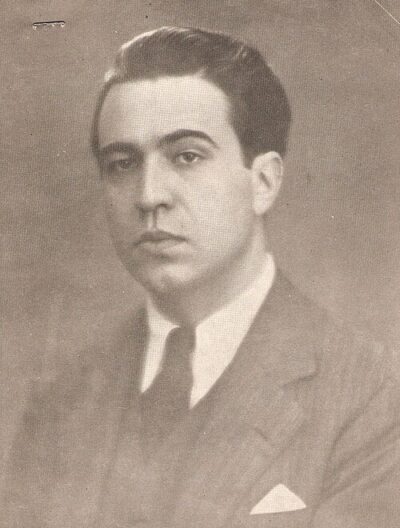
Los Contemporáneos
Los Contemporáneos is an artist collective. It was founded in 1928.
- Founded
- 1928
- Country
- Mexico
All 4 facts, and where they come from
Facts
4 facts · 0 confirmed by two sources · 0 cited · 4 from one source
Where this comes from
Papalocal keeps its own record. It started from these sources; what each one said is kept here as it was copied, so a change on their side never changes this page by itself. Tap one to read its version.
What Wikidata says · copied November 18, 2026 · revision 2332412468
- Described as
- artist collective
- Other names
- Los Contemporaneos
- What it is
- artist collective
- Followed by
- El Comité
- Founded
- 1928 · 1 reference
- Country
- Mexico
- Wikipedias with a page
- 4
Wikidata item Q842915 (wikidata.org/wiki/Q842915), public domain (CC0). Copied 2026-11-18.
What Wikipedia says · copied November 18, 2026 · revision 1374481646
Los Contemporáneos (which means "The Contemporaries" in English) can refer to a Mexican modernist group, active in the late 1920s and early 1930s, as well as to the literary magazine which served as the group's mouthpiece and artistic vehicle from 1928 to 1931. In a way, they were opposed to stridentism.
The group had its origins in friendships and literary collaborations that were formed among students attending Mexico City's elite National Preparatory School; that is where founding members José Gorostiza, Carlos Pellicer, Bernardo Ortiz de Montellano, Enrique González Rojo, and Jaime Torres Bodet met for the first time. This core group would all go on to attend together the Universidad Nacional Autónoma de México, specifically its Faculty of Jurisprudence, where they would come under the influence of professors Antonio Caso and Enrique González Martínez, both of whom were associated with the literary society Ateneo de México. Following this, a new generationally oriented and constituted society named the Nuevo Ateneo de la Juventud was formed in 1918. As a literary generation, the group was heir to modernismo, the work of Ramón López Velarde, and the tradition of the European avant garde. It was during this time that work by Los Contemporáneos began appearing in magazines and student periodicals such as Pegaso (1917) and San-Ev-Ank (1918). In 1921, Salvador Novo and Xavier Villaurrutia joined the group; Jorge Cuesta and Gilberto Owen would later enter its orbit as well. Los Contemporáneos benefited from government support during the period when José Vasconcelos was Secretary of Public Education (1920–24). Antonieta Rivas Mercado was also a member, as well as their patron.
Members of the group began writing for and collaborating in magazines and other literary venues. They also started their own publications, the first of which, México Moderno, was described as an "art and literature review" and ran from 1920 to 1923. La Falange (December 1922-February 1923), labeled a "review of Latin culture", and Ulises (May 1927–February 1928; see also Teatro Ulises), billed as a source of "curiosity and criticism", were two other short-lived, though influential, literary journals founded and directed by Contemporáneos.
In 1928, Torres Bodet inaugurated the group's longest-lived editorial endeavor, the magazine Contemporáneos. From June 1928 until December 1931 the magazine published, along with representative work by its founding members and allies, pieces by older, more established Mexican, Latin American, and Spanish writers, as well as translations of favored American and European authors. The rich and varied content of the publication was complemented by expensive details such as fine magazine paper and photographs and illustrations (made possible by continued government subventions).
In 1928, Jorge Cuesta would also publish, under the aegis of the Contemporáneos press, a poetic anthology titled Antología de la poesía mexicana moderna, which would give rise to heated polemics because of what were perceived, in certain literary and intellectual quarters, as glaring editorial omissions. Needless to say, much of the anthology's pages were taken up by the poetic output of Contemporáneos.
From the Wikipedia article “Los Contemporáneos” (en.wikipedia.org/wiki/Los_Contemporáneos), by its contributors, under CC BY-SA 4.0 (creativecommons.org/licenses/by-sa/4.0/). Copied 2026-11-18; not changed.
Confirmed Two sources agree. Cited One source, and it names where it got it. One source One source, without a reference of its own. Sources disagree The sources disagree. We show the best-supported value and keep theirs below.