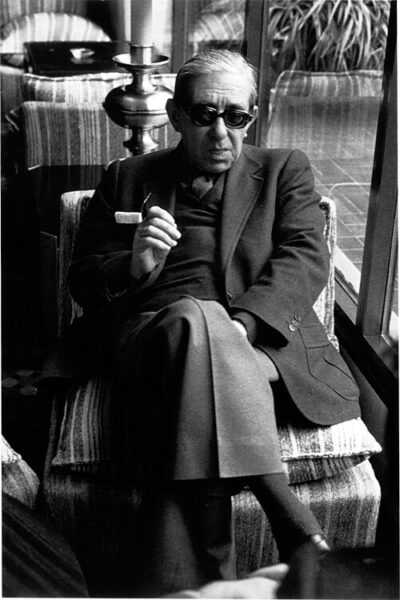
Los gozos y las sombras
Los gozos y las sombras is a novel by Gonzalo Torrente Ballester.
- Written by
- Gonzalo Torrente Ballester
- Genre
- family saga
- Country of origin
- Spain
All 5 facts, and where they come from
Facts
5 facts · 0 confirmed by two sources · 0 cited · 5 from one source
Where this comes from
Papalocal keeps its own record. It started from these sources; what each one said is kept here as it was copied, so a change on their side never changes this page by itself. Tap one to read its version.
What Wikidata says · copied November 17, 2026 · revision 2563742227
- Described as
- novel by Gonzalo Torrente Ballester
- What it is
- literary work
- Written by
- Gonzalo Torrente Ballester
- Genre
- family saga
- Language
- Spanish
- Country of origin
- Spain · 1 reference
- Wikipedias with a page
- 4
Wikidata item Q5642772 (wikidata.org/wiki/Q5642772), public domain (CC0). Copied 2026-11-17.
What Wikipedia says · copied November 17, 2026 · revision 1371592084
Los gozos y las sombras (lit. 'The joys and the shadows') is a trilogy of novels by the Spanish writer Gonzalo Torrente Ballester. It consists of El señor llega (1957, lit. 'The lord arrives'), Donde da la vuelta el aire (1960, lit. 'Where the air turns') and La pascua triste (1962, lit. 'The sad Easter'). It is set in a Galician fishing town before the Spanish Civil War and revolves around the conflicts between an aristocratic order and increasing economic rule. It is considered a major work of Spanish 20th-century literature.
El señor llega received the novel prize of the Fundación Juan March. The trilogy was the basis for the 1982 television series Los gozos y las sombras, produced by Televisión Española.
From the Wikipedia article “Los gozos y las sombras” (en.wikipedia.org/wiki/Los_gozos_y_las_sombras), by its contributors, under CC BY-SA 4.0 (creativecommons.org/licenses/by-sa/4.0/). Copied 2026-11-17; not changed.
Confirmed Two sources agree. Cited One source, and it names where it got it. One source One source, without a reference of its own. Sources disagree The sources disagree. We show the best-supported value and keep theirs below.