Lyapunov fractal
Lyapunov fractal is a type of fractal.
All 2 facts, and where they come from
Facts
2 facts · 0 confirmed by two sources · 0 cited · 2 from one source
Where this comes from
Papalocal keeps its own record. It started from these sources; what each one said is kept here as it was copied, so a change on their side never changes this page by itself. Tap one to read its version.
What Wikidata says · copied November 17, 2026 · revision 2485593439
- Described as
- type of fractal
- What it is
- mathematical concept
- Named after
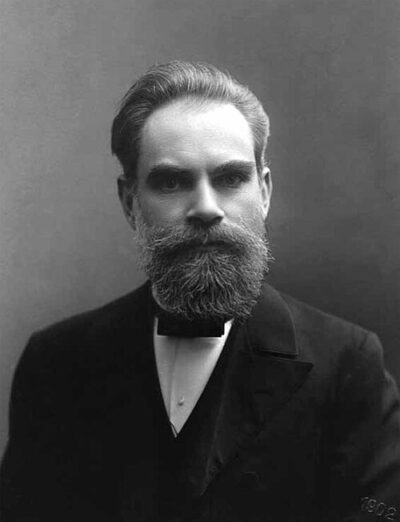
- Aleksandr Lyapunov
- Wikipedias with a page
- 12
Wikidata item Q596024 (wikidata.org/wiki/Q596024), public domain (CC0). Copied 2026-11-17.
What Wikipedia says · copied November 17, 2026 · revision 1309301088
In mathematics, Lyapunov fractals (also known as Markus–Lyapunov fractals) are bifurcational fractals derived from an extension of the logistic map in which the degree of the growth of the population, r, periodically switches between two values A and B.
A Lyapunov fractal is constructed by mapping the regions of stability and chaotic behaviour (measured using the Lyapunov exponent λ) in the a−b plane for given periodic sequences of a and b. In the images, yellow corresponds to λ<0 (stability), and blue corresponds to λ>0 (chaos).
Lyapunov fractals were discovered in the late 1980s by the Germano-Chilean physicist Mario Markus from the Max Planck Institute of Molecular Physiology. They were introduced to a large public by a science popularization article on recreational mathematics published in Scientific American in 1991.
From the Wikipedia article “Lyapunov fractal” (en.wikipedia.org/wiki/Lyapunov_fractal), by its contributors, under CC BY-SA 4.0 (creativecommons.org/licenses/by-sa/4.0/). Copied 2026-11-17; not changed.
Confirmed Two sources agree. Cited One source, and it names where it got it. One source One source, without a reference of its own. Sources disagree The sources disagree. We show the best-supported value and keep theirs below.