Magdeburg
Magdeburg is a capital city of the German state of Saxony-Anhalt.
- Country
- Germany (1990–)
All 7 facts, and where they come from
Facts
7 facts · 0 confirmed by two sources · 2 cited · 5 from one source
Where this comes from
Papalocal keeps its own record. It started from these sources; what each one said is kept here as it was copied, so a change on their side never changes this page by itself. Tap one to read its version.
What Wikidata says · copied November 17, 2026 · revision 2564335853
- Described as
- capital city of the German state of Saxony-Anhalt
- Other names
- MD
- What it is
- urban municipality in Germany; big city; Lutherstadt
- Located in
- Saxony-Anhalt (1990–) · 1 reference
- Country
- Germany (1990–) · 1 reference; East Germany (1949–1990)
- Official website
- https://www.magdeburg.de/
- Wikipedias with a page
- 141
Wikidata item Q1733 (wikidata.org/wiki/Q1733), public domain (CC0). Copied 2026-11-17.
What Wikipedia says · copied November 17, 2026 · revision 1384077583
Magdeburg ( MAG-də-burg; German: [ˈmakdəbʊʁk] , locally [ˈmaχdəbʊɐ̯ç]; Low Saxon: Meideborg [ˈmaˑɪ̯debɔɐ̯x]) is the capital and most populous city of the German state of Saxony-Anhalt. The city is on the Elbe river. The city was mentioned for the first time in a documentary record as "Magadoburg" in the Capitulary of Diedenhofen by Charlemagne in 805.
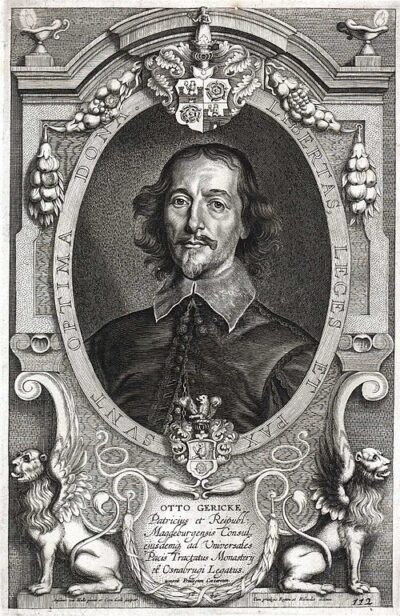
Otto I, the Holy Roman Emperor and the founder of the Archbishopric of Magdeburg, was buried in the city's cathedral after his death. Magdeburg's version of German town law, known as Magdeburg rights, spread throughout Central and Eastern Europe. In the Late Middle Ages, Magdeburg was one of the largest and most prosperous German cities and a notable member of the Hanseatic League. One of the most notable people from the city was Otto von Guericke, famous for his experiments with the Magdeburg hemispheres.
Magdeburg has experienced three major devastations in its history. In 1207 the first catastrophe struck the city, with a fire burning down large parts of the city, including the Ottonian cathedral. The Catholic League sacked Magdeburg in 1631, resulting in the death of 25,000 non-combatants, the largest loss of the Thirty Years' War. During World War II the Allies bombed the city in 1945 and destroyed much of the city centre. Today, around 46% of the city consists of buildings from before 1950.
After World War II, the city belonged to the German Democratic Republic from 1949 to 1990. Since then, many new construction projects have been implemented and old buildings have been restored. Magdeburg celebrated its 1,200th anniversary in 2005.
Magdeburg is on Autobahn 2 and Autobahn 14, connecting Eastern and Western Europe as well as northern and southern Germany. Significant industries include machines, healthcare, mechanical engineering, environmental technology, circular economy, logistics, culture, wood and information and communications technology.
There are numerous cultural institutions in the city, including the Theater Magdeburg and the Museum of Cultural History. The city is also the location of two universities, the Otto von Guericke University Magdeburg and the Magdeburg-Stendal University of Applied Sciences.
From the Wikipedia article “Magdeburg” (en.wikipedia.org/wiki/Magdeburg), by its contributors, under CC BY-SA 4.0 (creativecommons.org/licenses/by-sa/4.0/). Copied 2026-11-17; not changed.
Confirmed Two sources agree. Cited One source, and it names where it got it. One source One source, without a reference of its own. Sources disagree The sources disagree. We show the best-supported value and keep theirs below.
Picture: Wikimedia Commons: Aerial view of Magdeburg.jpg · See Commons file page