Manikongo
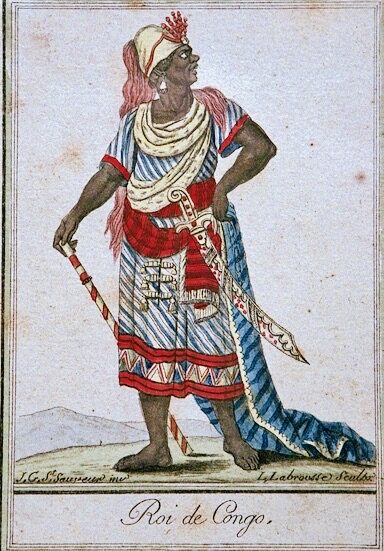
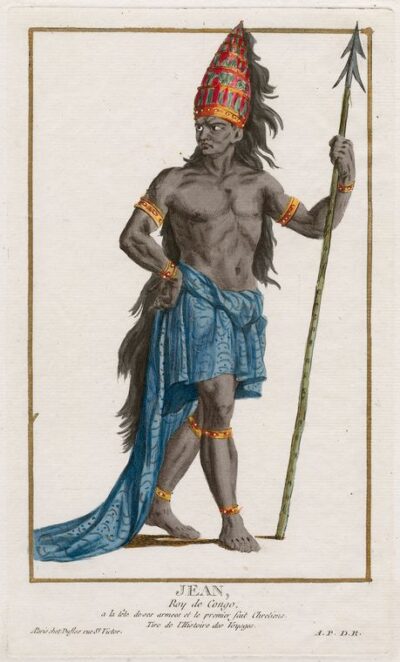
Manikongo is a title of the rulers of the Kingdom of Kongo.
- Office of
- Kingdom of Kongo
- Country
- Kingdom of Kongo
All 4 facts, and where they come from
Facts
4 facts · 0 confirmed by two sources · 0 cited · 4 from one source
Where this comes from
Papalocal keeps its own record. It started from these sources; what each one said is kept here as it was copied, so a change on their side never changes this page by itself. Tap one to read its version.
What Wikidata says · copied November 18, 2026 · revision 2569386049
- Described as
- title of the rulers of the Kingdom of Kongo
- Other names
- Mwene Kongo
- What it is
- noble title; position
- Country
- Kingdom of Kongo
- Office of
- Kingdom of Kongo
- Wikipedias with a page
- 16
Wikidata item Q926643 (wikidata.org/wiki/Q926643), public domain (CC0). Copied 2026-11-18.
What Wikipedia says · copied November 18, 2026 · revision 1302821057
Manikongo (also called Awenekongo or Mwenekongo) was the title of the ruler of the Kingdom of Kongo, a kingdom that existed from the 14th to the 19th centuries and consisted of land in present-day Angola, Gabon, the Republic of the Congo and the Democratic Republic of the Congo. The manikongo's seat of power was Mbanza Kongo (also called São Salvador from 1570 to 1975), now the capital of Zaire Province in Angola. The manikongo appointed governors for the provinces of the Kingdom and received tribute from neighbouring subjects.
The term "manikongo" is derived from Portuguese manicongo, an alteration of the KiKongo term Mwene Kongo (literally "Lord of Kongo"). The term wene, from which mwene is derived, is also used to mean kingdom and is attested with this meaning in the Kongo catechism of 1624 with reference to the Kingdom of Heaven. The term mwene is created by adding the personal prefix mu- to this stem, to mean "person of the kingdom".
Mwene is attested in very early texts, notably the letters of King Afonso I of Kongo, where he writes, to Portuguese kings Manuel I (in 1514) and João III concerning the moenipango (mwene Mpangu) and twice concerning the moinebata. Mani was used to mean not only "king" but also anyone holding authority, so provincial and sub-provincial officials also were called mani. Afonso did not entitle himself Manikongo, but rather rei de congo (king of Kongo).
Subjects were required to prostrate themselves before the Manikongo, approaching him on all fours, and when time came for the Manikongo to eat or drink, an attendant would chime two iron rods, cueing them to lay face-down so that they could not see him do so.
From the Wikipedia article “Manikongo” (en.wikipedia.org/wiki/Manikongo), by its contributors, under CC BY-SA 4.0 (creativecommons.org/licenses/by-sa/4.0/). Copied 2026-11-18; not changed.
Confirmed Two sources agree. Cited One source, and it names where it got it. One source One source, without a reference of its own. Sources disagree The sources disagree. We show the best-supported value and keep theirs below.