MARC standards
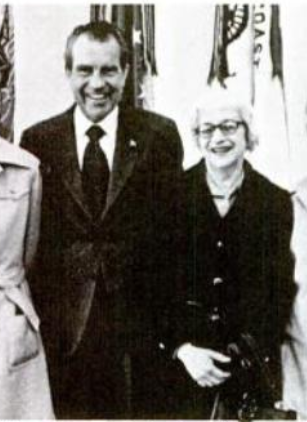
MARC standards is a digital formats for library cataloguing. It came out in 1965. It was made by Henriette Avram.
- Came out
- 1965
- Made by
- Henriette Avram
All 6 facts, and where they come from
Facts
6 facts · 0 confirmed by two sources · 1 cited · 5 from one source
Where this comes from
Papalocal keeps its own record. It started from these sources; what each one said is kept here as it was copied, so a change on their side never changes this page by itself. Tap one to read its version.
What Wikidata says · copied November 17, 2026 · revision 2567630140
- Described as
- digital formats for library cataloguing
- Other names
- MARC, .marc, .mrc, MA, Machine-Readable Cataloging
- What it is
- file format; metadata standard; academic discipline
- Made by
- Henriette Avram · 1 reference
- Came out
- 1965
- Official website
- https://www.loc.gov/marc/
- Wikipedias with a page
- 31
Wikidata item Q722609 (wikidata.org/wiki/Q722609), public domain (CC0). Copied 2026-11-17.
What Wikipedia says · copied November 17, 2026 · revision 1379334721
MARC (Machine-Readable Cataloging) is a set of metadata standards intended to be optimized for items cataloged by libraries, such as books, journals, and digital resources. Developed by Henriette Avram at the Library of Congress in the 1960s, it established the foundational data protocol that allowed libraries to share bibliographic resources electronically and ultimately optimized the transition from physical paper card catalogs to computerized catalog databases.
The standard provides a machine-readable structure to encode cataloging information, authority records, classification systems, and holdings information. By standardizing how bibliographic cataloging elements (i.e. authors, titles, publication dates, subject headings, number of pages, size, etc.) are formatted and identified, MARC can increase the functionality of integrated library systems across different institutions globally.
Since its inception, MARC standards has evolved into a family of related standards, the most widely adopted being MARC 21, which was created in 1999 through the harmonization of United States and Canadian MARC formats. While MARC 21 remains the predominant bibliographic standard in the global library community, it relies on a data architecture rooted in 1960s magnetic tape-storage technology. Consequently, the library sector is actively developing and transitioning toward modern, linked data frameworks, most notably BIBFRAME, to better integrate library catalogs with the broader semantic web.
From the Wikipedia article “MARC standards” (en.wikipedia.org/wiki/MARC_standards), by its contributors, under CC BY-SA 4.0 (creativecommons.org/licenses/by-sa/4.0/). Copied 2026-11-17; not changed.
Confirmed Two sources agree. Cited One source, and it names where it got it. One source One source, without a reference of its own. Sources disagree The sources disagree. We show the best-supported value and keep theirs below.