Markov property
Markov property is a stochastic process satisfying a certain property.
All 3 facts, and where they come from
Facts
3 facts · 0 confirmed by two sources · 0 cited · 3 from one source
Where this comes from
Papalocal keeps its own record. It started from these sources; what each one said is kept here as it was copied, so a change on their side never changes this page by itself. Tap one to read its version.
What Wikidata says · copied November 17, 2026 · revision 2505831379
- Described as
- stochastic process satisfying a certain property
- What it is
- property; mathematical concept
- Named after
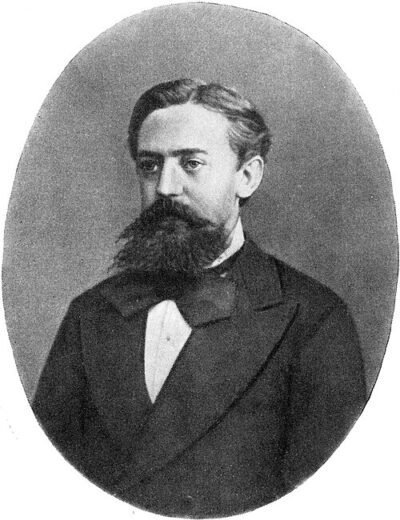
- Andrey Markov
- Wikipedias with a page
- 23
Wikidata item Q176695 (wikidata.org/wiki/Q176695), public domain (CC0). Copied 2026-11-17.
What Wikipedia says · copied November 17, 2026 · revision 1386022225
In probability theory and statistics, the Markov property is the memoryless property of a stochastic process, which means that its future evolution is independent of its history. It is named after the Russian mathematician Andrey Markov. The term strong Markov property is similar to the Markov property, except that the meaning of "present" is defined in terms of a random variable known as a stopping time.
The term Markov assumption is used to describe a model where the Markov property is assumed to hold, such as a hidden Markov model.
A Markov random field extends this property to two or more dimensions or to random variables defined for an interconnected network of items. An example of a model for such a field is the Ising model.
A discrete-time stochastic process satisfying the Markov property is known as a Markov chain.
From the Wikipedia article “Markov property” (en.wikipedia.org/wiki/Markov_property), by its contributors, under CC BY-SA 4.0 (creativecommons.org/licenses/by-sa/4.0/). Copied 2026-11-17; not changed.
Confirmed Two sources agree. Cited One source, and it names where it got it. One source One source, without a reference of its own. Sources disagree The sources disagree. We show the best-supported value and keep theirs below.