Markov's inequality
Markov's inequality is an inequality applying to non-negative random variables.
All 3 facts, and where they come from
Facts
3 facts · 0 confirmed by two sources · 0 cited · 3 from one source
Where this comes from
Papalocal keeps its own record. It started from these sources; what each one said is kept here as it was copied, so a change on their side never changes this page by itself. Tap one to read its version.
What Wikidata says · copied November 17, 2026 · revision 2516999282
- Described as
- inequality applying to non-negative random variables
- What it is
- concentration inequality; theorem
- Named after
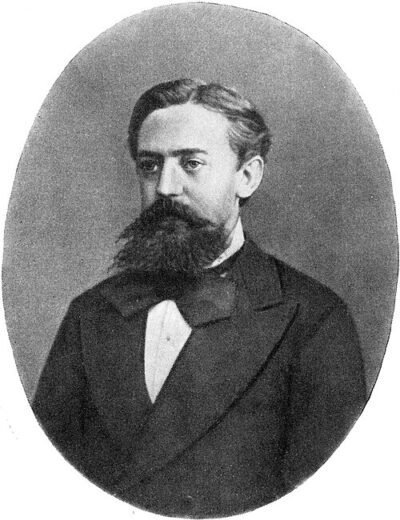
- Andrey Markov
- Wikipedias with a page
- 30
Wikidata item Q842436 (wikidata.org/wiki/Q842436), public domain (CC0). Copied 2026-11-17.
What Wikipedia says · copied November 17, 2026 · revision 1373711881
In probability theory, Markov's inequality gives an upper bound on the probability that a non-negative random variable is greater than or equal to some positive constant. Markov's inequality is tight in the sense that for each chosen positive constant, there exists a random variable such that the inequality is in fact an equality.
It is named after the Russian mathematician Andrey Markov, although it appeared earlier in the work of Pafnuty Chebyshev (Markov's teacher), and many sources, especially in analysis, refer to it as Chebyshev's inequality (sometimes, calling it the first Chebyshev inequality, while referring to Chebyshev's inequality as the second Chebyshev inequality) or Bienaymé's inequality.
Markov's inequality (and other similar inequalities) relate probabilities to expectations, and provide (frequently loose but still useful) bounds for the cumulative distribution function of a random variable. Mitzenmacher and Upfal note that Markov's inequality "is often too weak to yield useful results, but it is still a fundamental tool in developing more sophisticated bounds".
Markov's inequality can also be used to upper bound the expectation of a non-negative random variable in terms of its distribution function.
From the Wikipedia article “Markov's inequality” (en.wikipedia.org/wiki/Markov's_inequality), by its contributors, under CC BY-SA 4.0 (creativecommons.org/licenses/by-sa/4.0/). Copied 2026-11-17; not changed.
Confirmed Two sources agree. Cited One source, and it names where it got it. One source One source, without a reference of its own. Sources disagree The sources disagree. We show the best-supported value and keep theirs below.