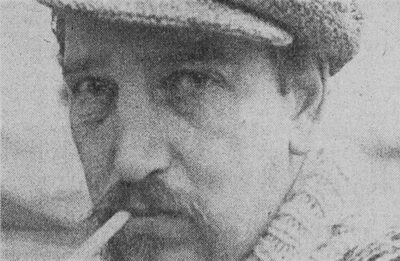
Martin Beck
Martin Beck is a fictional Swedish police detective. It was created by Sjöwall and Wahlöö.
- Performed by
- Peter Haber
- Created by
- Sjöwall and Wahlöö
All 6 facts, and where they come from
Facts
6 facts · 0 confirmed by two sources · 0 cited · 6 from one source
Where this comes from
Papalocal keeps its own record. It started from these sources; what each one said is kept here as it was copied, so a change on their side never changes this page by itself. Tap one to read its version.
What Wikidata says · copied November 19, 2026 · revision 2571343104
- Described as
- fictional Swedish police detective
- What it is
- fictional human
- Created by
- Sjöwall and Wahlöö
- Performed by
- Peter Haber; Carl-Gustaf Lindstedt; Keve Hjelm; Derek Jacobi
- Wikipedias with a page
- 12
Wikidata item Q13652117 (wikidata.org/wiki/Q13652117), public domain (CC0). Copied 2026-11-19.
What Wikipedia says · copied November 19, 2026 · revision 1376832432
Martin Beck is a fictional Swedish police detective, the main character in the series of ten novels by Maj Sjöwall and Per Wahlöö, collectively titled The Story of a Crime. Frequently referred to as the Martin Beck stories, all were adapted into films between 1967 and 1994. Six were adapted for a series featuring Gösta Ekman as Martin Beck.
Between 1997 and 2026, there were also 54 films (some released direct for video and broadcast on television) based on the characters, with Peter Haber as Martin Beck. Apart from the core duo of Beck and his right-hand man Gunvald Larsson, the latter adaptations bear little resemblance to the plots of the original series. They feature a widely different and evolving cast of characters, though roughly similar themes and settings around Stockholm.
From the Wikipedia article “Martin Beck” (en.wikipedia.org/wiki/Martin_Beck), by its contributors, under CC BY-SA 4.0 (creativecommons.org/licenses/by-sa/4.0/). Copied 2026-11-19; not changed.
Confirmed Two sources agree. Cited One source, and it names where it got it. One source One source, without a reference of its own. Sources disagree The sources disagree. We show the best-supported value and keep theirs below.