Marx Brothers
Marx Brothers is an American comedy troupe.
All 4 facts, and where they come from
Facts
4 facts · 0 confirmed by two sources · 0 cited · 4 from one source
Where this comes from
Papalocal keeps its own record. It started from these sources; what each one said is kept here as it was copied, so a change on their side never changes this page by itself. Tap one to read its version.
What Wikidata says · copied November 16, 2026 · revision 2555593260
- Described as
- American comedy troupe
- What it is
- stage act; group of siblings; comedy troupe
- Official website
- http://www.marx-brothers.org/index.htm
- Wikipedias with a page
- 93
Wikidata item Q64450 (wikidata.org/wiki/Q64450), public domain (CC0). Copied 2026-11-16.
What Wikipedia says · copied November 16, 2026 · revision 1378990484
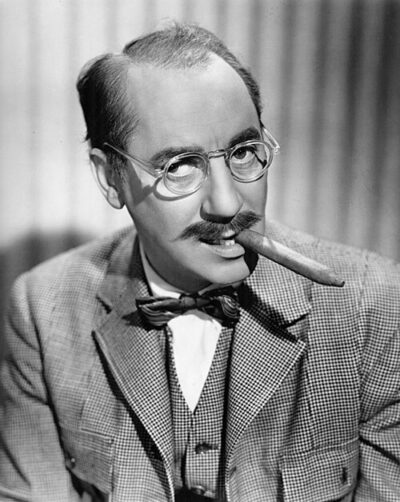
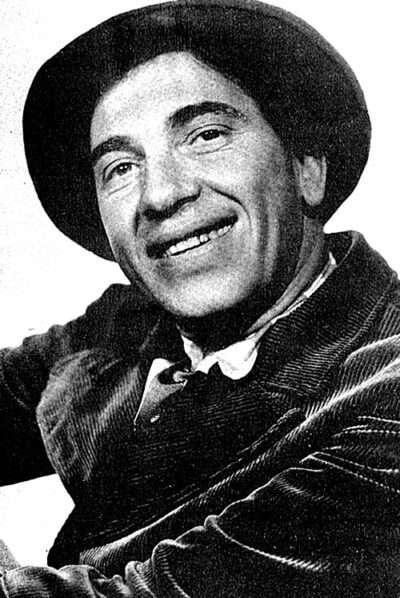
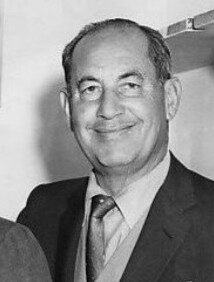
The Marx Brothers were an American comedy troupe who achieved success in vaudeville, on Broadway, and in 13 motion pictures. The five brothers were Chico Marx, Harpo Marx, Groucho Marx, Gummo Marx, and Zeppo Marx, though Gummo and Zeppo both left the group over time, leaving Chico, Harpo, and Groucho as a trio. They are considered by critics, scholars and fans to be among the greatest and most influential comedians of the 20th century, a recognition underscored by the American Film Institute (AFI) selecting five of their thirteen feature films to be among the top 100 comedy films (with two in the top fifteen) and including them as the only group of performers on AFI's 100 Years...100 Stars list of the 25 greatest male stars of Classical Hollywood cinema.
Their performing lives, heavily influenced by their mother, Minnie Marx, started with Groucho on stage at age 14, in 1905. He was joined, in succession, by Gummo and Harpo. Chico started a separate vaudeville act in 1911, and joined his brothers in 1912. Zeppo replaced Gummo when the latter joined the army in World War I. The brothers performed in vaudeville until 1923, when they found themselves banned from the major vaudeville circuits owing to a dispute with E. F. Albee. Failing in an attempt to produce their own shows on the alternate Shubert circuit, they transitioned to Broadway, where they achieved success with a series of hit musical comedies, including I'll Say She Is, The Cocoanuts, and Animal Crackers.
In 1928, the Marx Brothers made a deal with Paramount Pictures to appear in a screen version of The Cocoanuts, which was filmed at Paramount's Astoria Studios during the Broadway run of Animal Crackers. The Cocoanuts was released in 1929, followed the next year by a film version of Animal Crackers. They then moved to Los Angeles, where they starred in three more films for Paramount: Monkey Business (1931), Horse Feathers (1932), and Duck Soup (1933).
When their contract expired following the production of Duck Soup, Zeppo left the team and the Marx Brothers left Paramount. Groucho, Chico and Harpo were signed by Irving Thalberg at Metro-Goldwyn-Mayer, where they starred in A Night at the Opera (1935), which they considered to be their best film. Shortly after filming began on their follow-up movie, A Day at the Races (1937), Thalberg died of pneumonia at the age of 37. While they continued to appear in films, they felt that the quality of their work, as well as their interest in it, was waning.
After starring in Room Service (1938) for RKO Pictures, the brothers returned to MGM for At the Circus (1939) and Go West (1940). Although they announced that their next MGM film, The Big Store (1941), would be their farewell picture, they returned to the screen in A Night in Casablanca (1946), reportedly because Chico needed money. In 1949, they starred together in their final film, Love Happy.
Groucho went on to a successful career as host of the quiz show You Bet Your Life, while Harpo and Chico continued to make guest appearances on television and on the stage.
From the Wikipedia article “Marx Brothers” (en.wikipedia.org/wiki/Marx_Brothers), by its contributors, under CC BY-SA 4.0 (creativecommons.org/licenses/by-sa/4.0/). Copied 2026-11-16; not changed.
Confirmed Two sources agree. Cited One source, and it names where it got it. One source One source, without a reference of its own. Sources disagree The sources disagree. We show the best-supported value and keep theirs below.
Picture: Wikimedia Commons: Marx Brothers 1931.jpg · See Commons file page