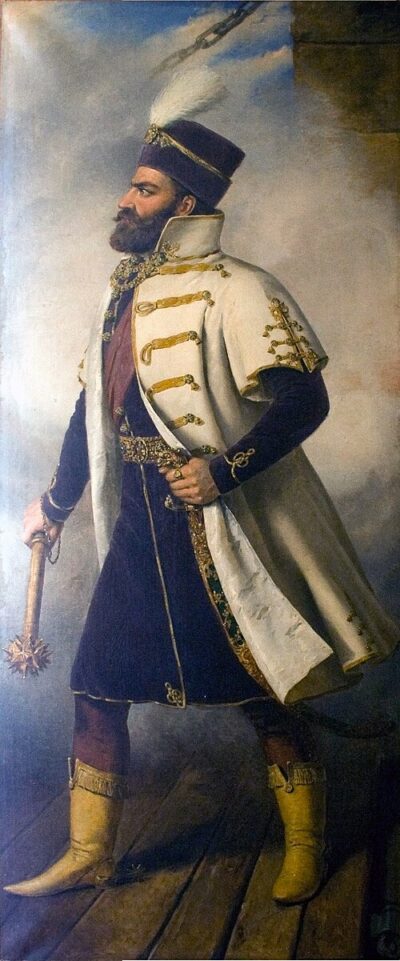
master of the treasury
Master of the treasury is a position in the Kingdom of Hungary and then the country of Hunagry. It was created in 1148.
- Office of
- Kingdom of Hungary
- Country
- Hungary
- Created
- 1148
All 6 facts, and where they come from
Facts
6 facts · 0 confirmed by two sources · 0 cited · 6 from one source
Where this comes from
Papalocal keeps its own record. It started from these sources; what each one said is kept here as it was copied, so a change on their side never changes this page by itself. Tap one to read its version.
What Wikidata says · copied November 17, 2026 · revision 2569610880
- Described as
- position in the Kingdom of Hungary and then the country of Hunagry
- Other names
- treasurer
- What it is
- position
- Created
- 1148
- Ended
- 1918
- Country
- Hungary; Kingdom of Hungary
- Office of
- Kingdom of Hungary
- Wikipedias with a page
- 12
Wikidata item Q713710 (wikidata.org/wiki/Q713710), public domain (CC0). Copied 2026-11-17.
What Wikipedia says · copied November 17, 2026 · revision 1366653163
The Master of the Treasury or treasurer (German: Königlicher Ober-Schatzmeister or Tarnackmeister, Hungarian: tárnokmester, Latin: magister tavarnicorum, magister tavernocorum regalium or summus camerarius, Slovak: taverník Croatian: tavernik) was a royal official in the Kingdom of Hungary from the 12th century. Although treasurers were initially responsible for collecting and administering royal revenues, they adopted more and more judiciary functions and turned into the highest judges of the realm. From the 14th century, treasurers presided over the court of appeals for a group of the free royal cities, including Buda, Bártfa, Eperjes, Kassa, Nagyszombat and Pressburg (Pozsony) (today Bardejov, Prešov, Košice, Trnava and Bratislava in Slovakia). By the end of the Middle Ages, it gradually evolved into a judicial position, and by the 20th century it had become a title without function.
The name is derived from the Slavic word tovor ("casket", "strong-box").
From the Wikipedia article “Master of the treasury” (en.wikipedia.org/wiki/Master_of_the_treasury), by its contributors, under CC BY-SA 4.0 (creativecommons.org/licenses/by-sa/4.0/). Copied 2026-11-17; not changed.
Confirmed Two sources agree. Cited One source, and it names where it got it. One source One source, without a reference of its own. Sources disagree The sources disagree. We show the best-supported value and keep theirs below.