Mathematica
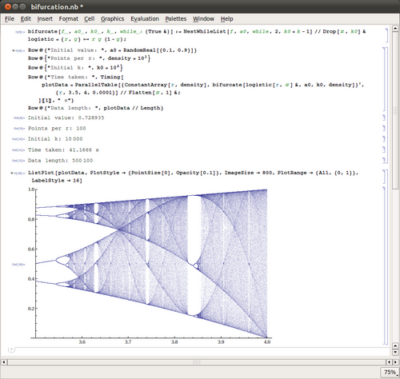
Mathematica is a computational software program. It came out in 1988. It was made by Wolfram Research.
- Came out
- June 23, 1988
- Made by
- Wolfram Research
All 6 facts, and where they come from
Facts
6 facts · 0 confirmed by two sources · 1 cited · 5 from one source
Where this comes from
Papalocal keeps its own record. It started from these sources; what each one said is kept here as it was copied, so a change on their side never changes this page by itself. Tap one to read its version.
What Wikidata says · copied November 17, 2026 · revision 2559737043
- Described as
- computational software program
- Other names
- Wolfram Mathematica, mma
- What it is
- programming language; computer algebra system; mathematical software
- Made by
- Wolfram Research · 1 reference
- Came out
- June 23, 1988
- Official website
- https://www.wolfram.com/mathematica/
- Wikipedias with a page
- 46
Wikidata item Q81294 (wikidata.org/wiki/Q81294), public domain (CC0). Copied 2026-11-17.
What Wikipedia says · copied November 17, 2026 · revision 1377672335
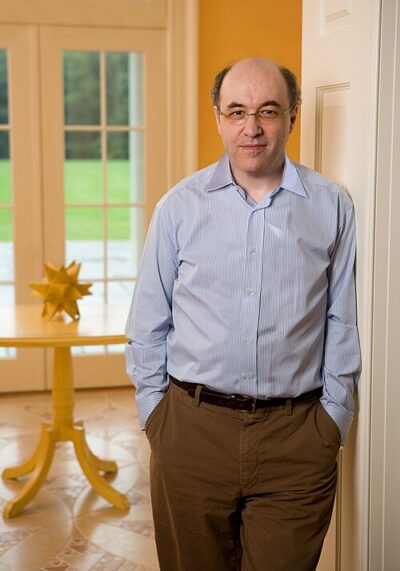
Wolfram Mathematica (also known as Mathematica) is a software system with built-in libraries for several areas of technical computing that allows machine learning, statistics, symbolic computation, data manipulation, network analysis, time series analysis, quantum computation framework, NLP, optimization, plotting functions and various types of data, implementation of algorithms, creation of user interfaces, and interfacing with programs written in other programming languages. It was conceived by Stephen Wolfram, and is developed by Wolfram Research of Champaign, Illinois. The Wolfram Language is the programming language used in Mathematica. Mathematica 1.0 was released on June 23, 1988 in Champaign, Illinois and Santa Clara, California. Mathematica's Wolfram Language is fundamentally based on Lisp.
From the Wikipedia article “Wolfram Mathematica” (en.wikipedia.org/wiki/Wolfram_Mathematica), by its contributors, under CC BY-SA 4.0 (creativecommons.org/licenses/by-sa/4.0/). Copied 2026-11-17; not changed.
Confirmed Two sources agree. Cited One source, and it names where it got it. One source One source, without a reference of its own. Sources disagree The sources disagree. We show the best-supported value and keep theirs below.
Picture: HolyCookie, via Wikimedia Commons · CC0