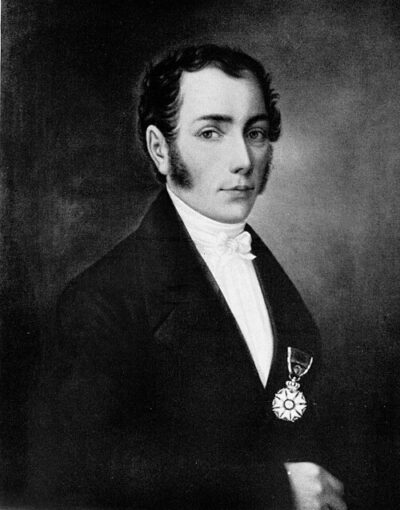
Mathematical-Mechanical Institute
Mathematical-Mechanical Institute is a munich maker of surveying, astronomical and optical instruments. It was founded in 1804.
- Founded
- 1804
- Headquarters
- Munich
- Country
- German Reich
All 4 facts, and where they come from
Facts
4 facts · 0 confirmed by two sources · 0 cited · 4 from one source
Where this comes from
Papalocal keeps its own record. It started from these sources; what each one said is kept here as it was copied, so a change on their side never changes this page by itself. Tap one to read its version.
What Wikidata says · copied November 17, 2026 · revision 2529988696
- Described as
- munich maker of surveying, astronomical and optical instruments
- What it is
- business
- Founded
- 1804
- Headquarters
- Munich
- Country
- German Reich
- Wikipedias with a page
- 2
Wikidata item Q18563009 (wikidata.org/wiki/Q18563009), public domain (CC0). Copied 2026-11-17.
What Wikipedia says · copied November 17, 2026 · revision 1367538621
The Mathematical-Mechanical Institute (German: Mathematisch-mechanisches Institut; later also Mathematisch-Feinmechanisches Institut) was a Munich workshop for scientific instruments, established in 1802 by the engineer Georg Friedrich von Reichenbach and the mechanic Joseph Liebherr. Joseph von Utzschneider joined them in 1804 as financier and commercial director. The institute produced instruments for geodesy, surveying and astronomy; its workshops brought together precise metalworking, circle graduation, optical glass and achromatic lens manufacture.
The workshop grew out of the needs of the Bavarian state survey. Reichenbach and Liebherr built dividing engines and compact instruments for field and observatory work. Utzschneider later established glassmaking and optical production at the secularised Benediktbeuern Abbey, where Joseph von Fraunhofer developed optical glass, lens-making and methods of testing finished optics. The Optical Institute at Benediktbeuern was separated contractually from the Munich mechanical workshop in 1809, but each continued to supply the other. Their products included theodolites, repeating circles, meridian circles, transit instruments, heliometers and large refracting telescopes.
The original partnership ended in stages: Liebherr withdrew in 1812, and Reichenbach and Utzschneider separated in 1814. Reichenbach continued the mechanical workshop with Traugott Ertel and transferred it to Ertel in 1821. Utzschneider retained the optical works with Fraunhofer and opened a competing Munich workshop with Liebherr and Werner. After Fraunhofer's death, Georg Merz and Franz Joseph Mahler directed the optical and mechanical departments and acquired the business in two stages, in 1838 and 1839. The Ertel line continued under later owners until 1984. The Merz company stopped production in 1932 and was deleted from the commercial register in 1938.
From the Wikipedia article “Mathematical-Mechanical Institute” (en.wikipedia.org/wiki/Mathematical-Mechanical_Institute), by its contributors, under CC BY-SA 4.0 (creativecommons.org/licenses/by-sa/4.0/). Copied 2026-11-17; not changed.
Confirmed Two sources agree. Cited One source, and it names where it got it. One source One source, without a reference of its own. Sources disagree The sources disagree. We show the best-supported value and keep theirs below.