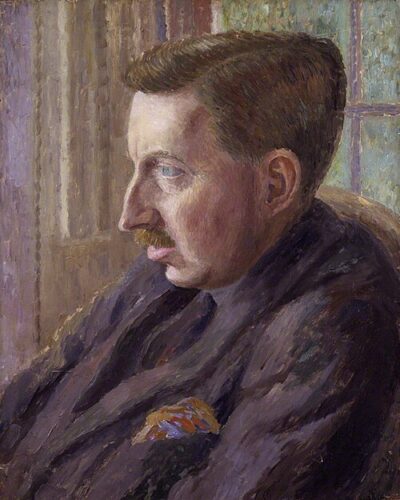
Maurice
Maurice is a novel by E. M. Forster. It came out in 1971.
- Published
- 1971
- Came out
- 1913
- Written by
- E. M. Forster
- Genre
- LGBT-related literature
- Country of origin
- United Kingdom
All 8 facts, and where they come from
Facts
8 facts · 0 confirmed by two sources · 0 cited · 8 from one source
Where this comes from
Papalocal keeps its own record. It started from these sources; what each one said is kept here as it was copied, so a change on their side never changes this page by itself. Tap one to read its version.
What Wikidata says · copied November 17, 2026 · revision 2511725792
- Described as
- novel by E. M. Forster
- What it is
- literary work
- Written by
- E. M. Forster
- Genre
- LGBT-related literature
- Published
- 1971
- Language
- British English; English
- Country of origin
- United Kingdom
- Came out
- 1913
- Wikipedias with a page
- 19
Wikidata item Q1241741 (wikidata.org/wiki/Q1241741), public domain (CC0). Copied 2026-11-17.
What Wikipedia says · copied November 17, 2026 · revision 1384644142
Maurice is a novel by E. M. Forster. A tale of homosexual love in early 20th-century England, it follows Maurice Hall from his schooldays through university and beyond. It was written in 1913–1914 and revised in 1932 as well as 1952–1960 (each version differs in the novel's last part). Forster was an admirer of the poet, philosopher, socialist, and early gay rights activist Edward Carpenter and, following a visit to Carpenter's home at Millthorpe, Derbyshire in 1913, was inspired to write Maurice. The cross-class relationship between Carpenter and his working-class partner, George Merrill, presented a real-life model for that of Maurice and Alec Scudder.
Although Forster showed different versions of the novel to a select few of his trusted friends (among them Siegfried Sassoon, Lytton Strachey, Edward Carpenter, Christopher Isherwood, Xiao Qian, and Forrest Reid) throughout the decades, it was published only posthumously in 1971. Forster did not seek to publish it during his lifetime, believing it to have been unpublishable during that period owing to public and legal attitudes to same-sex love. A note found on the manuscript read: "Publishable, but worth it?" Forster was determined that his novel should have a happy ending, but also feared that this would make the book liable to prosecution while male homosexuality remained illegal in the UK.
There has been speculation that Forster's unpublished manuscript may have been seen by D. H. Lawrence and influenced his 1928 novel Lady Chatterley's Lover, which also involves a gamekeeper becoming the lover of a member of the upper classes.
The novel has been adapted by James Ivory and Kit Hesketh-Harvey as the 1987 Merchant Ivory Productions film Maurice; for the stage; and as a 2007 BBC Radio 4 Classic Serial by Philip Osment.
From the Wikipedia article “Maurice (novel)” (en.wikipedia.org/wiki/Maurice_(novel)), by its contributors, under CC BY-SA 4.0 (creativecommons.org/licenses/by-sa/4.0/). Copied 2026-11-17; not changed.
Confirmed Two sources agree. Cited One source, and it names where it got it. One source One source, without a reference of its own. Sources disagree The sources disagree. We show the best-supported value and keep theirs below.
Picture: Wikimedia Commons: Maurice (1971) Forster.jpg · See Commons file page