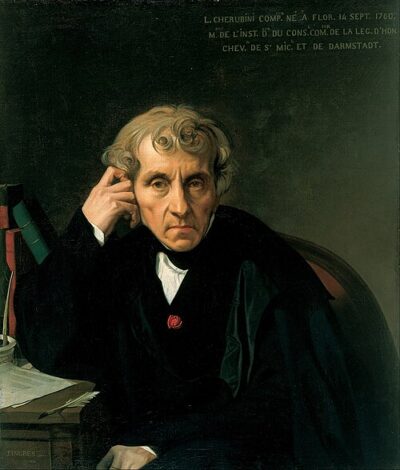
Médée
Médée is an opéra comique by Luigi Cherubini. It came out in 1797. It is based on Medea.
- Released
- 1797
- Genre
- opéra comique
- Country of origin
- Italy
All 9 facts, and where they come from
Facts
9 facts · 0 confirmed by two sources · 5 cited · 4 from one source
Where this comes from
Papalocal keeps its own record. It started from these sources; what each one said is kept here as it was copied, so a change on their side never changes this page by itself. Tap one to read its version.
What Wikidata says · copied November 17, 2026 · revision 2553460560
- Described as
- opéra comique by Luigi Cherubini
- Other names
- Medea, Medee
- What it is
- dramatico-musical work · 1 reference
- Music by
- Luigi Cherubini · 2 references
- Genre
- opéra comique · 1 reference; comic opera; opera · 1 reference
- Released
- 1797 · 1 reference
- Language
- French
- Country of origin
- Italy
- Based on
- Medea
- Wikipedias with a page
- 22
Wikidata item Q577758 (wikidata.org/wiki/Q577758), public domain (CC0). Copied 2026-11-17.
What Wikipedia says · copied November 17, 2026 · revision 1373126440
Médée is a French language opéra-comique by Luigi Cherubini. The libretto by François-Benoît Hoffman (Nicolas Étienne Framéry) was based on Euripides' tragedy of Medea and Pierre Corneille's play Médée. It is set in the ancient city of Corinth.
The opera was premiered on 13 March 1797 at the Théâtre Feydeau, Paris. It met with a lukewarm reception and was not immediately revived. During the twentieth century, it was usually performed in Italian translation as Medea, with the spoken dialogue replaced by recitatives not authorized by the composer. More recently, some performances have used Cherubini's original version.
The long-lost final aria, which Cherubini appears to have elided from his original manuscript, was discovered by researchers from the University of Manchester and Stanford University by employing x-ray techniques to reveal the blackened out areas of Cherubini's manuscript.
From the Wikipedia article “Médée (Cherubini)” (en.wikipedia.org/wiki/Médée_(Cherubini)), by its contributors, under CC BY-SA 4.0 (creativecommons.org/licenses/by-sa/4.0/). Copied 2026-11-17; not changed.
Confirmed Two sources agree. Cited One source, and it names where it got it. One source One source, without a reference of its own. Sources disagree The sources disagree. We show the best-supported value and keep theirs below.
Picture: Wikimedia Commons: Medea Cherubini titelblad.jpg · See Commons file page