Memoirs of Hadrian
Memoirs of Hadrian is a novel by Marguerite Yourcenar. It came out in 1951.
- Published
- 1951
- Written by
- Marguerite Yourcenar
- Genre
- epistolary novel
- Country of origin
- France
All 9 facts, and where they come from
Facts
9 facts · 0 confirmed by two sources · 4 cited · 5 from one source
Where this comes from
Papalocal keeps its own record. It started from these sources; what each one said is kept here as it was copied, so a change on their side never changes this page by itself. Tap one to read its version.
What Wikidata says · copied November 16, 2026 · revision 2559101268
- Described as
- novel by Marguerite Yourcenar
- What it is
- literary work
- Written by
- Marguerite Yourcenar · 1 reference
- Genre
- epistolary novel; philosophical novel; historical fiction; LGBT literature · 1 reference
- Published
- 1951 · 1 reference
- Language
- French · 1 reference
- Country of origin
- France
- Wikipedias with a page
- 25
Wikidata item Q1233795 (wikidata.org/wiki/Q1233795), public domain (CC0). Copied 2026-11-16.
What Wikipedia says · copied November 16, 2026 · revision 1384230687
Memoirs of Hadrian (French: Mémoires d'Hadrien) is a French-language novel by the Belgian-born French writer Marguerite Yourcenar about the life and death of the Roman Emperor Hadrian. First published in France in 1951, the book was a critical and commercial success. It was translated into English by Grace Frick and published as Hadrian's Memoirs in 1954 by Farrar, Straus and Young and the following year in the UK as Memoirs of Hadrian (by Secker & Warburg). American editions of this translation are now published under the latter title.
The book takes the form of a letter to Hadrian's adoptive grandson and eventual successor "Mark" (Marcus Aurelius). The emperor meditates on military triumphs, love of poetry and music, philosophy, and his passion for his lover Antinous, all in a manner similar to Gustave Flaubert's "melancholy of the antique world."
Yourcenar noted in her postscript "Carnet de note" to the original edition, quoting Flaubert, that she had chosen Hadrian as the subject of the novel in part because he had lived at a time when the Roman gods were no longer believed in, but Christianity was not yet established. This intrigued her for what she saw as parallels to her own post-war European world. Although the historical Hadrian wrote an autobiography, it has been lost.
In 2019, Memoirs of Hadrian was in Le Temps voted the sixth best book written in French in the 20th and 21st century by a jury of 50 literary connoisseurs.
From the Wikipedia article “Memoirs of Hadrian” (en.wikipedia.org/wiki/Memoirs_of_Hadrian), by its contributors, under CC BY-SA 4.0 (creativecommons.org/licenses/by-sa/4.0/). Copied 2026-11-16; not changed.
Confirmed Two sources agree. Cited One source, and it names where it got it. One source One source, without a reference of its own. Sources disagree The sources disagree. We show the best-supported value and keep theirs below.
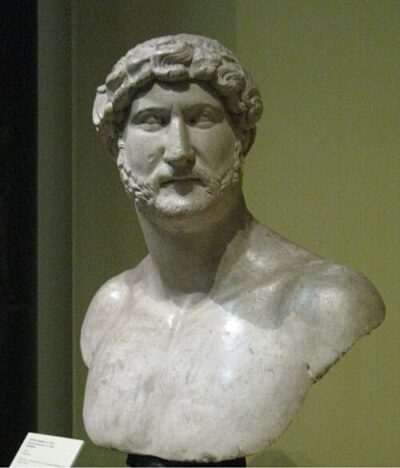
Picture: shakko, via Wikimedia Commons · CC BY-SA 3.0