Menger's theorem
Menger's theorem is a theorem characterizing graph connectivity by disjoint paths.
All 2 facts, and where they come from
Facts
2 facts · 0 confirmed by two sources · 0 cited · 2 from one source
Where this comes from
Papalocal keeps its own record. It started from these sources; what each one said is kept here as it was copied, so a change on their side never changes this page by itself. Tap one to read its version.
What Wikidata says · copied November 18, 2026 · revision 2515888700
- Described as
- theorem characterizing graph connectivity by disjoint paths
- What it is
- theorem
- Named after
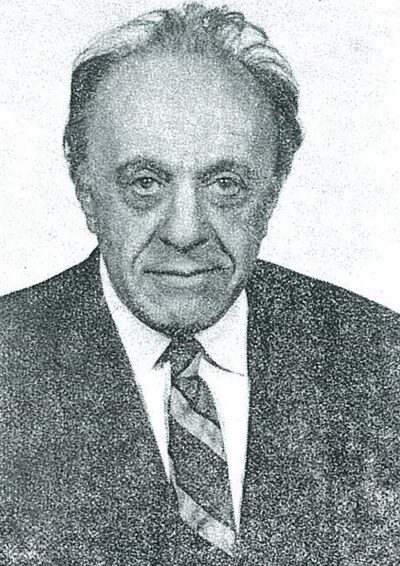
- Karl Menger
- Wikipedias with a page
- 13
Wikidata item Q928813 (wikidata.org/wiki/Q928813), public domain (CC0). Copied 2026-11-18.
What Wikipedia says · copied November 18, 2026 · revision 1372171172
In the mathematical discipline of graph theory, Menger's theorem says that in a finite graph, the size of a minimum cut set is equal to the maximum number of disjoint paths that can be found between any pair of vertices.
Proved by Karl Menger in 1927, it characterizes the connectivity of a graph.
It is generalized by the max-flow min-cut theorem, which is a weighted, edge version, and which in turn is a special case of the strong duality theorem for linear programs.
From the Wikipedia article “Menger's theorem” (en.wikipedia.org/wiki/Menger's_theorem), by its contributors, under CC BY-SA 4.0 (creativecommons.org/licenses/by-sa/4.0/). Copied 2026-11-18; not changed.
Confirmed Two sources agree. Cited One source, and it names where it got it. One source One source, without a reference of its own. Sources disagree The sources disagree. We show the best-supported value and keep theirs below.