Merry-Go-Round
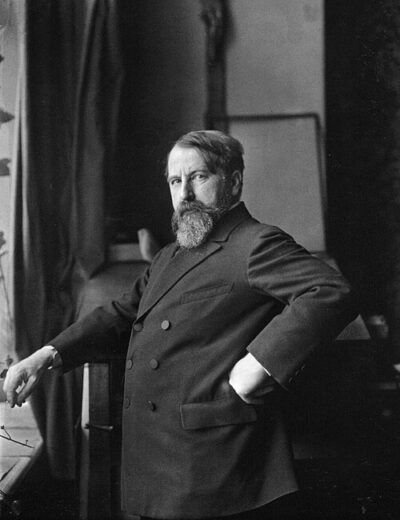
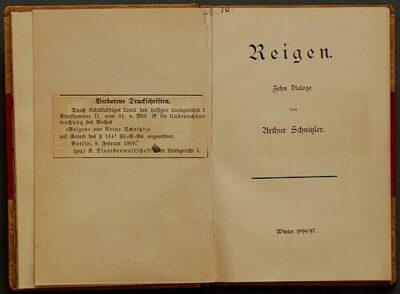
Merry-Go-Round is a play by Arthur Schnitzler. It came out in 1897.
- Published
- 1897
- Written by
- Arthur Schnitzler
- Genre
- tragedy
All 5 facts, and where they come from
Facts
5 facts · 0 confirmed by two sources · 1 cited · 4 from one source
Where this comes from
Papalocal keeps its own record. It started from these sources; what each one said is kept here as it was copied, so a change on their side never changes this page by itself. Tap one to read its version.
What Wikidata says · copied November 17, 2026 · revision 2549940220
- Described as
- play by Arthur Schnitzler
- Other names
- Reigen, La Ronde
- What it is
- literary work
- Written by
- Arthur Schnitzler
- Genre
- tragedy · 1 reference
- Published
- 1903 · 1 reference; 1897
- Language
- German
- Wikipedias with a page
- 14
Wikidata item Q1414190 (wikidata.org/wiki/Q1414190), public domain (CC0). Copied 2026-11-17.
What Wikipedia says · copied November 17, 2026 · revision 1362218455
La Ronde (also known by its original German title, Reigen) is a play in which ten people form an unwitting interpersonal circle with their secret sexual relationships. It was written by Arthur Schnitzler in 1897 and was controversial at that time. It scrutinizes the sexual morality and class ideology of its day through successive encounters between pairs of characters (before or after a sexual encounter). By choosing characters across all levels of society, the play offers social commentary on how sexual contact transgresses class boundaries. Printed privately in 1900, it was not publicly performed until 1920, when it provoked strong reactions. The play's two titles – in German Reigen and in French La Ronde – refer to a round dance, as portrayed in the English rhyme Ring a Ring o' Roses.
From the Wikipedia article “La Ronde (play)” (en.wikipedia.org/wiki/La_Ronde_(play)), by its contributors, under CC BY-SA 4.0 (creativecommons.org/licenses/by-sa/4.0/). Copied 2026-11-17; not changed.
Confirmed Two sources agree. Cited One source, and it names where it got it. One source One source, without a reference of its own. Sources disagree The sources disagree. We show the best-supported value and keep theirs below.
Picture: © H.-P.Haack, via Wikimedia Commons · CC BY 3.0