Meteorology
Meteorology is a treatise by Aristotle. It came out in -340.
- Came out
- 340 BC
- Written by
- Aristotle
- Genre
- treatise
All 5 facts, and where they come from
Facts
5 facts · 0 confirmed by two sources · 0 cited · 5 from one source
Where this comes from
Papalocal keeps its own record. It started from these sources; what each one said is kept here as it was copied, so a change on their side never changes this page by itself. Tap one to read its version.
What Wikidata says · copied November 17, 2026 · revision 2532528117
- Described as
- treatise by Aristotle
- Other names
- Meteorologica
- What it is
- reference work
- Written by
- Aristotle
- Genre
- treatise · 1 reference
- Language
- Ancient Greek
- Came out
- 340 BC
- Wikipedias with a page
- 18
Wikidata item Q2741164 (wikidata.org/wiki/Q2741164), public domain (CC0). Copied 2026-11-17.
What Wikipedia says · copied November 17, 2026 · revision 1376232384
Meteorology (Greek: Μετεωρολογικά; Latin: Meteorologica or Meteora) is a treatise by Aristotle. The text discusses what Aristotle believed to have been all the affections common to air and water, and the kinds and parts of the Earth and the affections of its parts. It includes early accounts of water evaporation, earthquakes, and other weather phenomena.
Aristotle's Meteorologica is the oldest comprehensive treatise on the subject of meteorology. Written around 340 B.C, it consists of four books; three pertaining to meteorology, and one to chemistry. Despite its ancient origins, Meteorologica was the basis for all modern day meteorology texts throughout Western Civilization up to the 17th century.
Throughout this treatise, Aristotle outlines two theories:The universe is spherical
The Earth’s inner core is composed by the orbits of heavenly bodies
The universe has two regions; the celestial (region past the Moon’s orbit) and the terrestrial region-sphere (the Moon’s tendency to orbit around the Earth)
From this theory, Aristotle achieved a distinction between what was understood (astronomy) and his new findings (meteorology)
The "Four-element Theory"
The terrestrial region was composed of the four elements: water, earth, fire, and air
These elements were arranged in spherical strata, with Earth as its center and the Moon on the outskirts of the sphere
They were in constant interchange with one another, e.g: heat from the Sun collides with cold water, creating air and mist
Meteorologica does not only contain the theories of Ancient Greeks, but is the accumulation of the findings from poets, philosophers, historians, etc.
Throughout his treatise, Aristotle is methodical and consistent while presenting his findings. First, he introduces the topic by presenting the theories of other scholars. By refuting or supporting their claims, Aristotle shapes his own assertions. Scholars such as Anaxagoras derived many of their theories on inferences, strongly basing their discoveries on observations rather than fact. In comparison, Aristotle approached his research by drawing deductive inferences when examining his theories. While formulating his hypotheses, he preconceived his theories based on observed weather phenomena. In lieu of using weather observations to develop his findings, he interpreted these observations to support his hypotheses.
An Arabic compendium of Meteorology, called al-'Athar al-`Ulwiyyah (Arabic: الآثار العلوية) and produced c. 800 CE by the Antiochene scholar Yahya ibn al-Batriq, was widely circulated among Muslim scholars over the following centuries. This was translated into Latin by Gerard of Cremona in the 12th century – and by this means, during the Twelfth-century Renaissance, entered the Western European world of medieval scholasticism. Gerard's "old translation" (vetus translatio) was superseded by an improved text by William of Moerbeke, the nova translatio, which was widely read, as it survives in numerous manuscripts; it received commentary by Thomas Aquinas and was often printed during the Renaissance.
From the Wikipedia article “Meteorology (Aristotle)” (en.wikipedia.org/wiki/Meteorology_(Aristotle)), by its contributors, under CC BY-SA 4.0 (creativecommons.org/licenses/by-sa/4.0/). Copied 2026-11-17; not changed.
Confirmed Two sources agree. Cited One source, and it names where it got it. One source One source, without a reference of its own. Sources disagree The sources disagree. We show the best-supported value and keep theirs below.
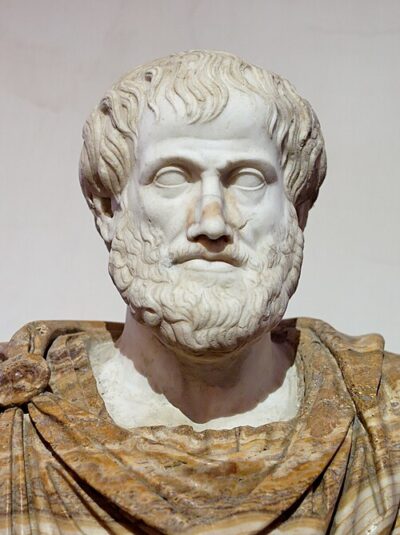
Picture: Wikimedia Commons: Tomus sextus operum Aristotelis Stagiritae V00235 00000004.tif · See Commons file page