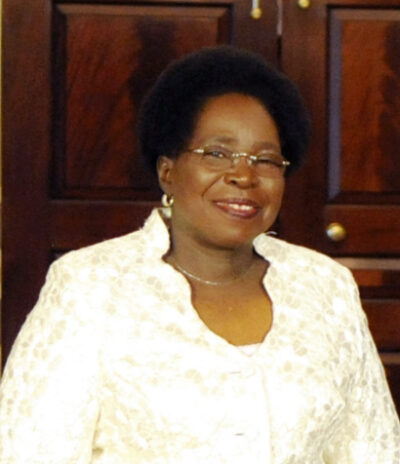
Minister of Cooperative Governance and Traditional Affairs
Minister of Cooperative Governance and Traditional Affairs is a South African government minister. It was created in 2009.
- Office of
- South Africa
- Country
- South Africa
- Created
- May 10, 2009
All 6 facts, and where they come from
Facts
6 facts · 0 confirmed by two sources · 0 cited · 6 from one source
Where this comes from
Papalocal keeps its own record. It started from these sources; what each one said is kept here as it was copied, so a change on their side never changes this page by itself. Tap one to read its version.
What Wikidata says · copied November 17, 2026 · revision 2356750616
- Described as
- South African government minister
- What it is
- public office; position
- Created
- May 10, 2009
- Country
- South Africa
- Office of
- South Africa
- Official website
- http://www.cogta.gov.za/ · 2 references
- Wikipedias with a page
- 1
Wikidata item Q20981732 (wikidata.org/wiki/Q20981732), public domain (CC0). Copied 2026-11-17.
What Wikipedia says · copied November 17, 2026 · revision 1373780339
The minister of cooperative governance and traditional affairs is the minister in the Cabinet of South Africa who is responsible for the Department of Cooperative Governance and the Department of Traditional Affairs.
The office was called the minister of provincial and local government from June 1999 until May 2009, when the minister assumed responsibility for traditional leadership institutions. Before June 1999, the office was the minister of constitutional development and provincial affairs. In his first cabinet, President Thabo Mbeki transferred responsibility for the portfolio of constitutional development to the minister of justice and constitutional development, where it remained thereafter.
From the Wikipedia article “Minister of Cooperative Governance and Traditional Affairs” (en.wikipedia.org/wiki/Minister_of_Cooperative_Governance_and_Traditional_Affairs), by its contributors, under CC BY-SA 4.0 (creativecommons.org/licenses/by-sa/4.0/). Copied 2026-11-17; not changed.
Confirmed Two sources agree. Cited One source, and it names where it got it. One source One source, without a reference of its own. Sources disagree The sources disagree. We show the best-supported value and keep theirs below.