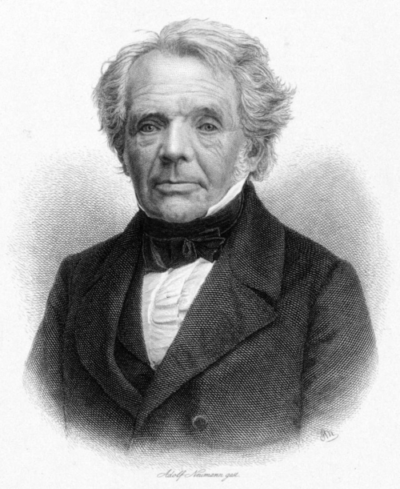
Möbius strip
Möbius strip is a two-dimensional surface with only one side and only one edge.
All 3 facts, and where they come from
Facts
3 facts · 0 confirmed by two sources · 1 cited · 2 from one source
Where this comes from
Papalocal keeps its own record. It started from these sources; what each one said is kept here as it was copied, so a change on their side never changes this page by itself. Tap one to read its version.
What Wikidata says · copied November 17, 2026 · revision 2559767868
- Described as
- two-dimensional surface with only one side and only one edge
- Other names
- Moebius strip, Moebius band, Möbius band, Mobius strip, Mobius band
- What it is
- mathematical concept; shape
- Named after
- August Ferdinand Möbius · 1 reference
- Wikipedias with a page
- 68
Wikidata item Q226843 (wikidata.org/wiki/Q226843), public domain (CC0). Copied 2026-11-17.
What Wikipedia says · copied November 17, 2026 · revision 1385173133
In mathematics, a Möbius strip, Möbius band, or Möbius loop is a surface that can be formed by attaching the ends of a strip of paper together with a half-twist. As a mathematical object, it was discovered by Johann Benedict Listing and August Ferdinand Möbius in 1858, but it had already appeared in Roman mosaics from the third century CE. The Möbius strip is a non-orientable surface, meaning that within it one cannot consistently distinguish clockwise from counterclockwise turns. Every non-orientable surface contains a Möbius strip.
As an abstract topological space, the Möbius strip can be embedded into three-dimensional Euclidean space in many different ways: A clockwise half-twist is different from a counterclockwise half-twist, and it can also be embedded with odd numbers of twists greater than one, or with a knotted centerline. Any two embeddings with the same knot for the centerline and the same number and direction of twists are topologically equivalent. All of these embeddings have only one side, but when embedded in other spaces, the Möbius strip may have two sides. It has only a single boundary curve.
Several geometric constructions of the Möbius strip provide it with additional structure. It can be swept as a ruled surface by a line segment rotating in a rotating plane, with or without self-crossings. A thin paper strip with its ends joined to form a Möbius strip can bend smoothly as a developable surface or be folded flat; the flattened Möbius strips include the trihexaflexagon. The Sudanese Möbius strip is a minimal surface in a hypersphere, and the Meeks Möbius strip is a self-intersecting minimal surface in ordinary Euclidean space. Both the Sudanese Möbius strip and another self-intersecting Möbius strip, the cross-cap, have a circular boundary. A Möbius strip without its boundary, called an open Möbius strip, can form surfaces of constant curvature. Certain highly symmetric spaces whose points represent lines in the plane have the shape of a Möbius strip.
The many applications of Möbius strips include mechanical belts that wear evenly on both sides, dual-track roller coasters whose carriages alternate between the two tracks, and world maps printed so that antipodes appear opposite each other. Möbius strips appear in molecules and devices with novel electrical and electromechanical properties, and have been used to prove impossibility results in social choice theory. In popular culture, Möbius strips appear in artworks by M. C. Escher, Max Bill, and others, and in the design of the recycling symbol. Many architectural concepts have been inspired by the Möbius strip, including the building design for the NASCAR Hall of Fame. Performers including Harry Blackstone Sr. and T. Nelson Downs have based stage magic tricks on the properties of the Möbius strip. The canons of Johann Sebastian Bach have been analyzed using Möbius strips. Many works of speculative fiction feature Möbius strips; more generally, a plot structure based on the Möbius strip, of events that repeat with a twist, is common in fiction.
From the Wikipedia article “Möbius strip” (en.wikipedia.org/wiki/Möbius_strip), by its contributors, under CC BY-SA 4.0 (creativecommons.org/licenses/by-sa/4.0/). Copied 2026-11-17; not changed.
Confirmed Two sources agree. Cited One source, and it names where it got it. One source One source, without a reference of its own. Sources disagree The sources disagree. We show the best-supported value and keep theirs below.
Picture: Wikimedia Commons: Möbius strip.jpg · See Commons file page