Morena
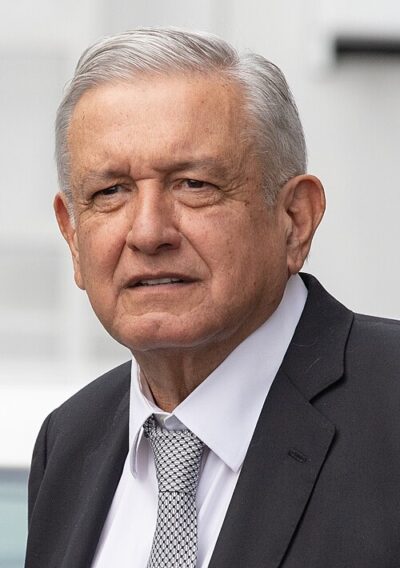
Morena is a Mexican political party. It was founded in 2014 by Andrés Manuel López Obrador. Its headquarters are in Mexico City. It stands for left-wing populism, left-wing nationalism and social democracy.
- Country
- Mexico
- Founded
- July 9, 2014
- Ideology
- left-wing populism
- Chair
- Luisa María Alcalde (2024–)
All 14 facts, and where they come from
Facts
14 facts · 0 confirmed by two sources · 8 cited · 5 from one source · 1 where the sources disagree
What’s different
- Founded: we show July 9, 2014 (Sources disagree). Wikidata also lists October 2, 2011
Where this comes from
Papalocal keeps its own record. It started from these sources; what each one said is kept here as it was copied, so a change on their side never changes this page by itself. Tap one to read its version.
What Wikidata says · copied November 17, 2026 · revision 2553173829
- Described as
- Mexican political party
- Other names
- MORENA, National Regeneration Movement
- What it is
- political party (2014–) · 1 reference; non-governmental organization (2011–2012) · 1 reference; asociación civil (2012–2014) · 1 reference
- Founded
- July 9, 2014 · 4 references; October 2, 2011 · 1 reference
- Founded by
- Andrés Manuel López Obrador · 1 reference
- Headquarters
- Mexico City · 1 reference
- Country
- Mexico
- Chair
- Marti Batres (2012–2015); Andrés Manuel López Obrador (2015–2017)
- Ideology
- left-wing populism; left-wing nationalism · 1 reference; social democracy; non-interventionism
- Official website
- https://morena.org/ · 1 reference
- Wikipedias with a page
- 29
Wikidata item Q15717618 (wikidata.org/wiki/Q15717618), public domain (CC0). Copied 2026-11-17.
What Wikipedia says · copied November 17, 2026 · revision 1385452159
The National Regeneration Movement (Spanish: Movimiento Regeneración Nacional), commonly referred to by its syllabic abbreviation Morena (Spanish: [moˈɾena]), is a centre-left to left-wing political party in Mexico. Founded in 2011 by Andrés Manuel López Obrador as a civil association and registered as a political party in 2014, it emerged from López Obrador's break with the Party of the Democratic Revolution. Since its formation, Morena has grown rapidly to become the dominant political force in the country.
Morena's platform combines elements of left-wing populism and progressivism. It opposes neoliberal economic policies and supports expanded social welfare programs, increased public investment in infrastructure, and state control over strategic industries such as energy, oil, and electricity. Drawing substantial backing from working-class voters, rural communities, the urban poor, and regions historically underserved by federal investment, Morena positions itself as an alternative to the long-dominant Institutional Revolutionary Party (PRI) and the conservative National Action Party (PAN). The party's name also alludes to Mexico's Catholic national patroness: the Virgin of Guadalupe, known as La Morena, meaning "tan-skinned" in Spanish.
As of 2026, Morena holds the presidency, majorities in both the Chamber of Deputies and the Senate, and most governorships, making it the largest political party in Mexico by representation. It also holds significant influence over the federal judiciary, with many elected judges having ties to the party. As of 2026, with 11,629,541 members, it is also the largest political party in the history of Mexico. The party's dominance has reshaped Mexico's political landscape, ushering in what some analysts describe as a new era of hegemony.
From the Wikipedia article “Morena (political party)” (en.wikipedia.org/wiki/Morena_(political_party)), by its contributors, under CC BY-SA 4.0 (creativecommons.org/licenses/by-sa/4.0/). Copied 2026-11-17; not changed.
Confirmed Two sources agree. Cited One source, and it names where it got it. One source One source, without a reference of its own. Sources disagree The sources disagree. We show the best-supported value and keep theirs below.