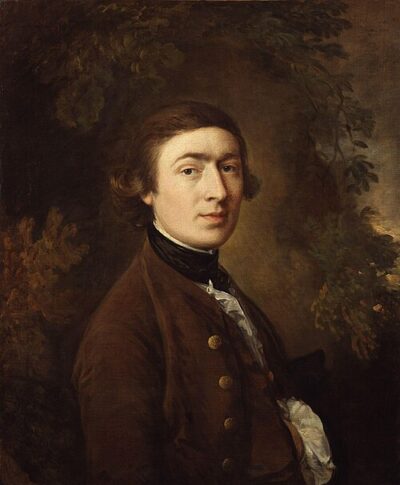
Mr and Mrs Andrews
Mr and Mrs Andrews is a painting by Thomas Gainsborough. It came out in 1748.
- Came out
- 1748
- Created by
- Thomas Gainsborough
- Genre
- portrait
All 6 facts, and where they come from
Facts
6 facts · 0 confirmed by two sources · 2 cited · 4 from one source
Where this comes from
Papalocal keeps its own record. It started from these sources; what each one said is kept here as it was copied, so a change on their side never changes this page by itself. Tap one to read its version.
What Wikidata says · copied November 17, 2026 · revision 2569671772
- Described as
- painting by Thomas Gainsborough
- Other names
- Mr. and Mrs. Andrews
- What it is
- painting · 1 reference
- Created by
- Thomas Gainsborough · 1 reference
- Genre
- portrait; landscape painting
- Came out
- 1748 · 1 reference
- Country
- United Kingdom
- Wikipedias with a page
- 21
Wikidata item Q1619527 (wikidata.org/wiki/Q1619527), public domain (CC0). Copied 2026-11-17.
What Wikipedia says · copied November 17, 2026 · revision 1361314613
Mr and Mrs Andrews is an oil on canvas portrait of about 1750 by Thomas Gainsborough, now in the National Gallery, London. Today it is one of his most famous works, but it remained in the family of the sitters until 1960 and was very little known before it appeared in an exhibition in Ipswich in 1927, after which it was regularly requested for other exhibitions in Britain and abroad, and praised by critics for its charm and freshness. By the post-war years its iconic status was established, and it was one of four paintings chosen to represent British art in an exhibition in Paris celebrating the Coronation of Queen Elizabeth II in 1953. Soon the painting began to receive hostile scrutiny as a paradigm of the paternalist and capitalist society of 18th-century England, but it remains a firm popular favourite.
The work is an unusual combination of two common types of painting of the period: a double portrait, here of a recently married couple, Robert and Frances Andrews, as well as a landscape view of the English countryside. Gainsborough's work mainly consisted of these two different genres, but their striking combination side-by-side in this extended horizontal format is unique in Gainsborough's oeuvre, and extremely rare for other painters. Conversation piece was the term for a group portrait that contained other elements and activities, but these normally showed more figures, seen engaged in some activity or in an interior, rather than a landscape empty of people.
Gainsborough was later famously given to complaining that well-paid portrait work kept him away from his true love of landscape painting, and his interest probably combined with that of his clients, a couple from two families whose main income was probably not from landowning, to make – more prominently than was normal in a portrait – a display of the country estate that had formed part of Mrs Andrews' dowry.
From the Wikipedia article “Mr and Mrs Andrews” (en.wikipedia.org/wiki/Mr_and_Mrs_Andrews), by its contributors, under CC BY-SA 4.0 (creativecommons.org/licenses/by-sa/4.0/). Copied 2026-11-17; not changed.
Confirmed Two sources agree. Cited One source, and it names where it got it. One source One source, without a reference of its own. Sources disagree The sources disagree. We show the best-supported value and keep theirs below.
Picture: Wikimedia Commons: Thomas Gainsborough - Mr. und Mrs. Andrews (c. 1750).jpg · See Commons file page