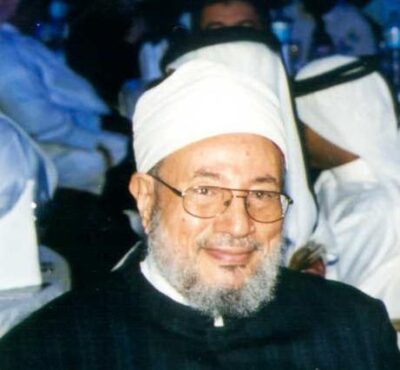
Muslim Brotherhood
The Muslim Brotherhood is a transnational Sunni Islamist organization. It was founded in 1928 by Hassan al-Banna. Its headquarters are in Cairo. It stands for religious conservatism, Islamism and Pan-Islamism.
- Country
- Egypt
- Founded
- March 22, 1928
- Ideology
- religious conservatism
- Chair
- الدكتور صلاح عبد الحق (2022–)
All 15 facts, and where they come from
Facts
15 facts · 0 confirmed by two sources · 1 cited · 14 from one source
Where this comes from
Papalocal keeps its own record. It started from these sources; what each one said is kept here as it was copied, so a change on their side never changes this page by itself. Tap one to read its version.
What Wikidata says · copied November 17, 2026 · revision 2547501251
- Described as
- transnational Sunni Islamist organization
- Other names
- Society of Muslim Brothers, (Jamaat) Al-Ikhwan Al-Muslimeen, Egyptian Muslim Brotherhood
- What it is
- religious organization; international organization; political party
- Founded
- March 22, 1928
- Founded by
- Hassan al-Banna
- Headquarters
- Cairo
- Country
- Egypt
- Industry
- religious congregations and associations
- Chair
- الدكتور صلاح عبد الحق (2022–); Mohammed Badie (2010–2013)
- Ideology
- religious conservatism; Islamism · 1 reference; Pan-Islamism; social conservatism
- Official website
- https://www.ikhwanonline.com/
- Wikipedias with a page
- 92
Wikidata item Q133207 (wikidata.org/wiki/Q133207), public domain (CC0). Copied 2026-11-17.
What Wikipedia says · copied November 17, 2026 · revision 1386155177
The Society of the Muslim Brothers (Arabic: جماعة الإخوان المسلمين, romanized: Jamāʿat al-Ikhwān al-Muslimīn), better known as the Muslim Brotherhood (الإخوان المسلمون, al-Ikhwān al-Muslimūn), is a transnational Sunni Islamist organization founded in Egypt by Islamic scholar, imam and schoolteacher Hassan al-Banna in 1928. Al-Banna's teachings spread far beyond Egypt, influencing various Islamist movements from charitable organizations to political parties.
Initially, as a pan-Islamist, religious, and social movement, its members preached Islam in Egypt, taught the illiterate, and set up hospitals and business enterprises. The group later advanced into the political arena, aiming to end British colonial rule in Egypt. The movement's self-stated aim is the establishment of a state ruled by Sharia under a caliphate, with one of its most well-known slogans being "Islam is the solution". The group combines political activism with Islamic charity work.
The group spread to other Muslim countries but still has one of its largest organizations in Egypt, despite a succession of government crackdowns since 1948. It remained a fringe group in the politics of the Arab world until the 1967 Six-Day War, when Islamism replaced popular secular Arab nationalism after a resounding Arab defeat by the State of Israel. The movement was also supported by Saudi Arabia, with which it shared mutual enemies like communism.
The Arab Spring initially brought the group legalization and substantial political power, but that expansion had suffered reversals by 2013. The Egyptian Muslim Brotherhood was legalized in 2011 and won several elections, including the 2012 Egyptian presidential election, in which its candidate, Mohamed Morsi, became Egypt's first democratically elected president. Following massive demonstrations and unrest, Morsi was overthrown in the 2013 Egyptian coup d'état orchestrated by the military and placed under house arrest; a later review found that the Muslim Brotherhood had failed to moderate its views or embrace democratic values during its time in power. The group was then banned in Egypt and declared a terrorist organization. The Persian Gulf monarchies of Saudi Arabia and the United Arab Emirates followed suit.
The group's founder accepted the utility of political violence, and members of the Brotherhood conducted assassinations and attempted assassinations on Egyptian state figures during his lifetime, including Egyptian prime minister Mahmoud El Nokrashy Pasha in 1948. In his 1964 book Milestones (معالم في الطريق, Maʿālim fī aṭ-Ṭarīq), Sayyid Qutb, one of the group's most prominent thinkers, promoted takfirism, a doctrine permitting "the stigmatisation of other Muslims as infidel or apostate, and of existing states as un-Islamic, and the use of extreme violence in the pursuit of the perfect Islamic society"; the doctrine continues to inspire many jihadist movements. The group abandoned the use of violence in the 1970s. The Muslim Brotherhood since does not have a clear ideological platform on violence.
In recent years, the primary state backers of the Muslim Brotherhood have been Qatar and AKP-ruled Turkey. As of 2026, the flagship group or specific chapters are considered a terrorist organization by the governments of Argentina, Kenya, Germany, Bahrain, Egypt, Russia, Saudi Arabia, the United Arab Emirates, and the United States.
From the Wikipedia article “Muslim Brotherhood” (en.wikipedia.org/wiki/Muslim_Brotherhood), by its contributors, under CC BY-SA 4.0 (creativecommons.org/licenses/by-sa/4.0/). Copied 2026-11-17; not changed.
Confirmed Two sources agree. Cited One source, and it names where it got it. One source One source, without a reference of its own. Sources disagree The sources disagree. We show the best-supported value and keep theirs below.
People connected 5
Party members
 Ahmad YasinPalestinian political and religious leader (1937–2004)
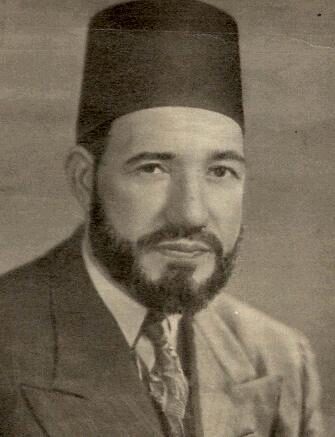 Hassan al-BannaEgyptian Islamist leader and politician (1906—1949)
 Mohammed BadieEgyptian politician, 8th Supreme Guide of the Muslim Brotherhood
- AAbdullah Yusuf AzzamPalestinian Sunni Islamic scholar and Salafi jihadist (1941–1989)