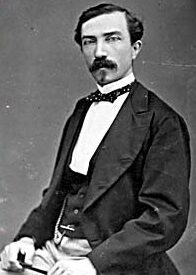
National Committee
The National Committee is a political party. It was founded in 1863. Its headquarters are in Athens. It stands for parliamentary system.
- Country
- Kingdom of Greece
- Founded
- 1863
- Ideology
- parliamentary system
All 6 facts, and where they come from
Facts
6 facts · 0 confirmed by two sources · 0 cited · 6 from one source
Where this comes from
Papalocal keeps its own record. It started from these sources; what each one said is kept here as it was copied, so a change on their side never changes this page by itself. Tap one to read its version.
What Wikidata says · copied November 18, 2026 · revision 2450342098
- Described as
- political party
- What it is
- political party
- Founded
- 1863
- Ended
- 1879
- Headquarters
- Athens · 1 reference
- Country
- Kingdom of Greece
- Ideology
- parliamentary system
- Wikipedias with a page
- 2
Wikidata item Q14567930 (wikidata.org/wiki/Q14567930), public domain (CC0). Copied 2026-11-18.
What Wikipedia says · copied November 18, 2026 · revision 1253744588
The National Committee (Greek: Εθνικό Κομιτάτο) was a Greek political party founded by Epameinondas Deligiorgis.
The party was founded in 1865, and was composed by young revolutionaries who helped to overthrow King Otto, ending his semi-absolutist reign. The party wasn't linked with the traditional parties (English, French and Russian), and wasn't associated with a particular ideology.
The National Committee tried to establish a strong parliamentary system, along with economic modernization, supporting the creation of infrastructures. It also campaigned for a military reform and a cultural expansion in the Ottoman Empire.
However, the absence of a strong party's apparatus caused its dissolution after Deligiorgis' death in 1879.
From the Wikipedia article “National Committee” (en.wikipedia.org/wiki/National_Committee), by its contributors, under CC BY-SA 4.0 (creativecommons.org/licenses/by-sa/4.0/). Copied 2026-11-18; not changed.
Confirmed Two sources agree. Cited One source, and it names where it got it. One source One source, without a reference of its own. Sources disagree The sources disagree. We show the best-supported value and keep theirs below.