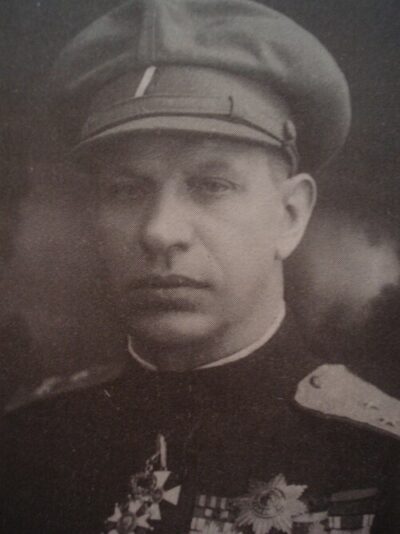
National Fascist Community
The National Fascist Community is a political movement. It was founded in 1926. Its headquarters are in Prague. It stands for fascism, pan-slavism and antisemitism.
- Country
- Czechoslovakia
- Founded
- March 1926
- Ideology
- fascism
- Chair
- Radola Gajda
All 10 facts, and where they come from
Facts
10 facts · 0 confirmed by two sources · 0 cited · 10 from one source
Where this comes from
Papalocal keeps its own record. It started from these sources; what each one said is kept here as it was copied, so a change on their side never changes this page by itself. Tap one to read its version.
What Wikidata says · copied November 18, 2026 · revision 2538944551
- Described as
- political movement
- What it is
- political movement
- Founded
- March 1926
- Ended
- November 22, 1938
- Headquarters
- Prague · 1 reference
- Country
- Czechoslovakia
- Chair
- Radola Gajda
- Ideology
- fascism; pan-slavism; antisemitism; anti-communism
- Wikipedias with a page
- 11
Wikidata item Q1450567 (wikidata.org/wiki/Q1450567), public domain (CC0). Copied 2026-11-18.
What Wikipedia says · copied November 18, 2026 · revision 1380617935
The National Fascist Community (Czech: Národní obec fašistická, NOF, sometimes translated as National Fascist League) was a Czechoslovak fascist movement led by Radola Gajda, and based on the fascism of Benito Mussolini. It was responsible for the only fascist coup in Czechoslovak history.
From the Wikipedia article “National Fascist Community” (en.wikipedia.org/wiki/National_Fascist_Community), by its contributors, under CC BY-SA 4.0 (creativecommons.org/licenses/by-sa/4.0/). Copied 2026-11-18; not changed.
Confirmed Two sources agree. Cited One source, and it names where it got it. One source One source, without a reference of its own. Sources disagree The sources disagree. We show the best-supported value and keep theirs below.