National Islamic Movement of Afghanistan
National Islamic Movement of Afghanistan is a political party in Afghanistan. It was founded in 1992. It stands for Uzbeks and secularism.
- Country
- Afghanistan
- Founded
- 1992
- Ideology
- Uzbeks
- Chair
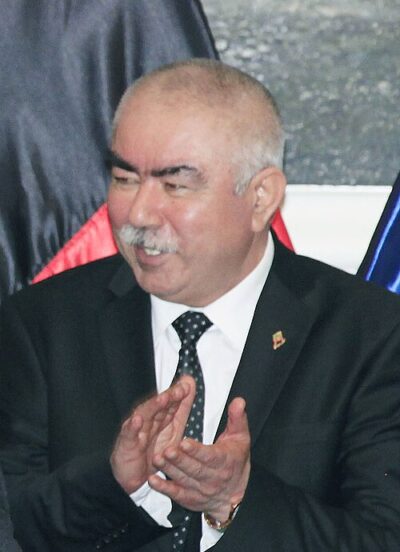
- Abdul Rashid Dostum
All 6 facts, and where they come from
Facts
6 facts · 0 confirmed by two sources · 0 cited · 6 from one source
Where this comes from
Papalocal keeps its own record. It started from these sources; what each one said is kept here as it was copied, so a change on their side never changes this page by itself. Tap one to read its version.
What Wikidata says · copied November 17, 2026 · revision 2501943772
- Described as
- political party in Afghanistan
- What it is
- political party
- Founded
- 1992
- Country
- Afghanistan
- Chair
- Abdul Rashid Dostum · 1 reference
- Ideology
- Uzbeks; secularism
- Wikipedias with a page
- 15
Wikidata item Q3189989 (wikidata.org/wiki/Q3189989), public domain (CC0). Copied 2026-11-17.
What Wikipedia says · copied November 17, 2026 · revision 1385054874
The National Islamic Movement of Afghanistan (Dari: جنبش ملی اسلامی افغانستان, Junbish-i-Milli Islami Afghanistan), sometimes called simply Junbish, is a political party in Afghanistan founded by Abdul Rashid Dostum in 1992 made from his loyalist remnants from the People's Democratic Party of Afghanistan's communist government.
It is described as "an organisation heavily peopled with former Communists and Islamists," and is regarded as somewhat secular and left-leaning. Its voter base is mostly Uzbeks, and it is strongest in Jowzjan, Balkh, Faryab, Sar-e Pol, and Samangan provinces. It was mainly supported by Uzbekistan during the Afghan Civil War of 1992–1996 and the Afghan Civil War of 1996–2001.
From the Wikipedia article “National Islamic Movement of Afghanistan” (en.wikipedia.org/wiki/National_Islamic_Movement_of_Afghanistan), by its contributors, under CC BY-SA 4.0 (creativecommons.org/licenses/by-sa/4.0/). Copied 2026-11-17; not changed.
Confirmed Two sources agree. Cited One source, and it names where it got it. One source One source, without a reference of its own. Sources disagree The sources disagree. We show the best-supported value and keep theirs below.