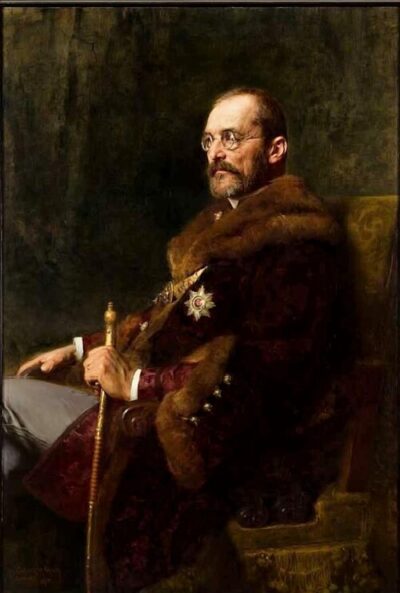
National Party of Work
National Party of Work is a political party in Hungary. It was founded in 1910. Its headquarters are in Budapest. It stands for classical liberalism.
- Country
- Kingdom of Hungary
- Founded
- 1910
- Ideology
- classical liberalism
All 6 facts, and where they come from
Facts
6 facts · 0 confirmed by two sources · 0 cited · 6 from one source
Where this comes from
Papalocal keeps its own record. It started from these sources; what each one said is kept here as it was copied, so a change on their side never changes this page by itself. Tap one to read its version.
What Wikidata says · copied November 17, 2026 · revision 2470901024
- Described as
- political party in Hungary
- What it is
- political party
- Founded
- 1910 · 1 reference
- Ended
- 1918
- Headquarters
- Budapest · 1 reference
- Country
- Kingdom of Hungary
- Ideology
- classical liberalism
- Wikipedias with a page
- 7
Wikidata item Q1216660 (wikidata.org/wiki/Q1216660), public domain (CC0). Copied 2026-11-17.
What Wikipedia says · copied November 17, 2026 · revision 1370130657
The National Party of Work (Hungarian: Nemzeti Munkapárt) was a liberal political party in Hungary between 1910 and the end of World War I. The party was established by István Tisza after the defeat of the Liberal Party in the 1905 and 1906 elections. The party was led by László Lukács, who served as Prime Minister from 1912 to 1913. As its predecessor the Liberal Party, the new party also remained bitterly unpopular among ethnic Hungarian voters, and could rely mostly on the support of ethnic minority voters.
From the Wikipedia article “National Party of Work” (en.wikipedia.org/wiki/National_Party_of_Work), by its contributors, under CC BY-SA 4.0 (creativecommons.org/licenses/by-sa/4.0/). Copied 2026-11-17; not changed.
Confirmed Two sources agree. Cited One source, and it names where it got it. One source One source, without a reference of its own. Sources disagree The sources disagree. We show the best-supported value and keep theirs below.