National People's Congress
The National People's Congress is a supreme organ of state power of the People's Republic of China. It was founded in 1954. Its headquarters are in Great Hall of the People.
- Founded
- September 15, 1954
- Headquarters
- Great Hall of the People
- Country
- People's Republic of China
All 9 facts, and where they come from
Facts
9 facts · 0 confirmed by two sources · 1 cited · 8 from one source
Where this comes from
Papalocal keeps its own record. It started from these sources; what each one said is kept here as it was copied, so a change on their side never changes this page by itself. Tap one to read its version.
What Wikidata says · copied November 17, 2026 · revision 2560241977
- Described as
- supreme organ of state power of the People's Republic of China
- Other names
- NPC
- What it is
- unicameral legislature; state level institution; rubber stamp · 1 reference
- Founded
- September 15, 1954
- Headquarters
- Great Hall of the People
- Country
- People's Republic of China
- Chair
- Zhao Leji
- Office of
- People's Republic of China
- Official website
- http://en.npc.gov.cn.cdurl.cn/
- Wikipedias with a page
- 61
Wikidata item Q19211 (wikidata.org/wiki/Q19211), public domain (CC0). Copied 2026-11-17.
What Wikipedia says · copied November 17, 2026 · revision 1385833759
The National People's Congress (NPC) is the supreme state organ of power of the People's Republic of China that heads the country's people's congress system. It is vested with unified state power and carries out its duties under the control of the Chinese Communist Party (CCP), as the party is constitutionally enshrined as having the "leading role" in China's communist state system. The NPC uses its status in the state system to establish a division of labour between itself and inferior state organs. The relationship between the NPC and the inferior organs make up the unified state apparatus.
As the supreme organ of state power, the NPC has the power to amend China's communist state constitution, enact legislation, and oversee the operations of the state's inferior organs. It elects and can remove the top officials of the inferior state organs: the State Council, the state president, the Supreme People's Court (SPC), the Supreme People's Procuratorate, the National Supervisory Commission, and the Central Military Commission. Since the session of the NPC, referred to as the full Congress, typically convenes only once per year, it delegates the majority of its powers to its permanent organ, the Standing Committee of the National People's Congress (NPCSC). The NPCSC consists of approximately 170 legislators and holds bi-monthly sessions to ensure the continuous exercise of state power when the NPC is not in session.
The NPC holds annual sessions every spring, usually lasting from 10 to 14 days, in the Great Hall of the People on the west side of Tiananmen Square in Beijing. At these sessions, it votes on important pieces of legislation and personnel assignments, among other things. These sessions are usually timed to occur with the meetings of the National Committee of the Chinese People's Political Consultative Conference (CPPCC), a consultative organ whose members represent various social groups. As the NPC and the CPPCC are the main deliberative organs of China, they are often referred to as the "Two Sessions" (Lianghui). According to the NPC, its annual meetings provide an opportunity for the officers of state to review past policies and to present future plans to the nation.
In China, as with most communist states, the legislative body of the NPC has been characterized as a rubber stamp for the CCP. The deputies are elected by provincial-level people's congresses, which are themselves indirectly elected. The CCP controls the nomination and election processes at all levels of the people's congress system. The NPC and its Standing Committee are required to uphold the leadership of the CCP and adhere to CCP ideology per law. With 2,847 members in 2026, it is the largest legislative organ in the world. The NPC is elected for a term of five years. Membership for deputies is part-time and unpaid. Delegates to the National People's Congress may hold seats in other organs of government simultaneously, and the party and the NPC typically include all senior figures in Chinese politics. However, membership of the Standing Committee is often full-time and carries a salary, and Standing Committee members are not allowed to simultaneously hold positions in executive, judicial, prosecutorial, or supervisory posts.
From the Wikipedia article “National People's Congress” (en.wikipedia.org/wiki/National_People's_Congress), by its contributors, under CC BY-SA 4.0 (creativecommons.org/licenses/by-sa/4.0/). Copied 2026-11-17; not changed.
Confirmed Two sources agree. Cited One source, and it names where it got it. One source One source, without a reference of its own. Sources disagree The sources disagree. We show the best-supported value and keep theirs below.
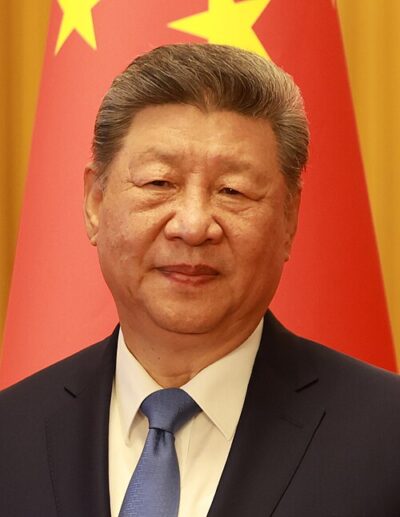
Picture: Wikimedia Commons: The Third Session of the 12th National People's Congress open 20150305.jpg · See Commons file page