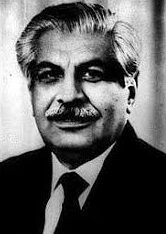
National Peoples Party
The National Peoples Party is a political party. It was founded in 1986. Its headquarters are in Karachi.
- Country
- Pakistan
- Founded
- 1986
All 5 facts, and where they come from
Facts
5 facts · 0 confirmed by two sources · 0 cited · 5 from one source
Where this comes from
Papalocal keeps its own record. It started from these sources; what each one said is kept here as it was copied, so a change on their side never changes this page by itself. Tap one to read its version.
What Wikidata says · copied November 19, 2026 · revision 2401223750
- Described as
- political party
- What it is
- political party
- Founded
- 1986
- Ended
- 2013
- Headquarters
- Karachi
- Country
- Pakistan
- Wikipedias with a page
- 6
Wikidata item Q650648 (wikidata.org/wiki/Q650648), public domain (CC0). Copied 2026-11-19.
What Wikipedia says · copied November 19, 2026 · revision 1385086410
The National People's Party (NPP) (Urdu: نیشنل پیپلز پارٹی) was a political party located in Pakistan (most active in the province of Sindh and southern parts of Punjab). It was founded in 1986 by Ghulam Mustafa Jatoi after he had a disagreement with Benazir Bhutto, subsequently leaving the Pakistan Peoples Party.
In the 2008 Pakistani general elections, the party only managed to win one seat in the National Assembly. Ghulam Mustafa's son Ghulam Murtaza Khan Jatoi won the election in NA-211 Naushahro Feroze-I, holding the seat won in 2002 elections by Dr. Abdul Ghaffar Khan Jemms under the National Alliance banner. The party also won four provincial seats, all in the Sindh province.
In May 2013, the party merged with the Pakistan Muslim League (N).
It was later merged in GDA in 2018, when its leader Ghulam Murtaza Jatoi joined GDA before 2018 general elections.
From the Wikipedia article “National People's Party (Pakistan)” (en.wikipedia.org/wiki/National_People's_Party_(Pakistan)), by its contributors, under CC BY-SA 4.0 (creativecommons.org/licenses/by-sa/4.0/). Copied 2026-11-19; not changed.
Confirmed Two sources agree. Cited One source, and it names where it got it. One source One source, without a reference of its own. Sources disagree The sources disagree. We show the best-supported value and keep theirs below.