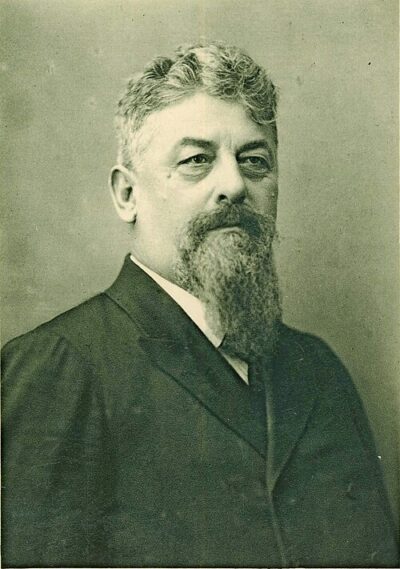
National Progressive Party
The National Progressive Party is a political party. It was founded in 1894.
- Country
- Austria–Hungary
- Founded
- 1894
All 5 facts, and where they come from
Facts
5 facts · 0 confirmed by two sources · 0 cited · 5 from one source
Where this comes from
Papalocal keeps its own record. It started from these sources; what each one said is kept here as it was copied, so a change on their side never changes this page by itself. Tap one to read its version.
What Wikidata says · copied November 18, 2026 · revision 2439570199
- Described as
- political party
- What it is
- political party; former liberal party
- Founded
- 1894 · 1 reference
- Ended
- 1919
- Country
- Austria–Hungary
- Wikipedias with a page
- 4
Wikidata item Q1562864 (wikidata.org/wiki/Q1562864), public domain (CC0). Copied 2026-11-18.
What Wikipedia says · copied November 18, 2026 · revision 1255780409
The National Progressive Party (Slovene: Narodno napredna stranka) was a political party in the Carniola region of Austria-Hungary. It was established in 1894 by Ivan Tavčar as the National Party of Carniola (Narodna stranka za Kranjsko); it was renamed The National Progressive Party in 1905. It continued to operate under this name until after the First World War, when it merged with the National Party of Styria (Narodna Stranka za Štajersko) into the Yugoslav Democratic Party, only to be incorporated into the pan-Yugoslav State Party of Serbian, Croatian and Slovene Democrats (Serbo-Croatian: Državnotvorna stranka demokrata Srba, Hrvata i Slovenaca) less than a year later.
The National Progressive Party adopted a liberal nationalist political stance and had a clear majority in the municipal council of Ljubljana-Laibach during the 1880s.
From the Wikipedia article “National Progressive Party (Carniola)” (en.wikipedia.org/wiki/National_Progressive_Party_(Carniola)), by its contributors, under CC BY-SA 4.0 (creativecommons.org/licenses/by-sa/4.0/). Copied 2026-11-18; not changed.
Confirmed Two sources agree. Cited One source, and it names where it got it. One source One source, without a reference of its own. Sources disagree The sources disagree. We show the best-supported value and keep theirs below.