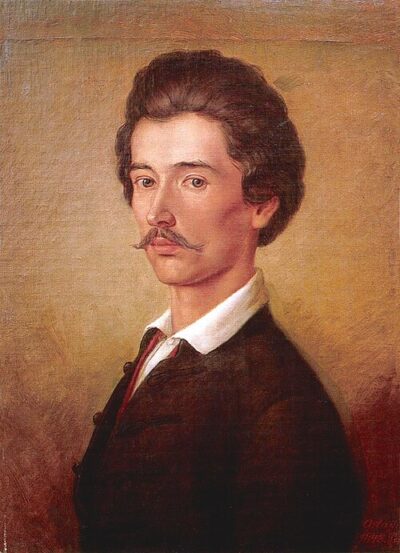
Nemzeti dal
Nemzeti dal is a Hungarian poem. It came out in 1848. It was written by Sándor Petőfi.
- Published
- March 15, 1848
- Came out
- March 13, 1848
- Written by
- Sándor Petőfi
All 5 facts, and where they come from
Facts
5 facts · 0 confirmed by two sources · 0 cited · 5 from one source
Where this comes from
Papalocal keeps its own record. It started from these sources; what each one said is kept here as it was copied, so a change on their side never changes this page by itself. Tap one to read its version.
What Wikidata says · copied November 17, 2026 · revision 2529157171
- Described as
- Hungarian poem
- Other names
- National Song
- What it is
- literary work
- Written by
- Sándor Petőfi
- Published
- March 15, 1848
- Language
- Hungarian
- Came out
- March 13, 1848
- Wikipedias with a page
- 20
Wikidata item Q988729 (wikidata.org/wiki/Q988729), public domain (CC0). Copied 2026-11-17.
What Wikipedia says · copied November 17, 2026 · revision 1276630739
The Nemzeti dal ("National Song") is a Hungarian patriotic poem written by Sándor Petőfi that is said to have inspired the Hungarian Revolution of 1848. Petőfi read the poem aloud on 15 March on the steps of the Hungarian National Museum in Budapest to a gathering crowd, who by the end were chanting the refrain as they began to march around the city, seizing the presses, liberating political prisoners, and declaring the end of Austrian rule.
Hungarians celebrate the anniversary of the revolution on 15 March. Red-white-green ribbons are worn to commemorate the fallen revolutionaries and the ideal of the revolution. Hungary briefly achieved independence from 1848–1849, but was defeated by the combined forces of the Habsburgs and the Russian Empire. Despite its ultimate defeat, the revolution initiated a chain of events that led to the autonomy of Hungary within the new Austro-Hungarian Empire in 1867.
The poem has come to rank third after the Himnusz and Szózat as a statement of Hungarian national identity.
The translation below of the "National Poem" is literal, attempting to convey the precise meaning of the original text.
From the Wikipedia article “Nemzeti dal” (en.wikipedia.org/wiki/Nemzeti_dal), by its contributors, under CC BY-SA 4.0 (creativecommons.org/licenses/by-sa/4.0/). Copied 2026-11-17; not changed.
Confirmed Two sources agree. Cited One source, and it names where it got it. One source One source, without a reference of its own. Sources disagree The sources disagree. We show the best-supported value and keep theirs below.
Picture: Wikimedia Commons: Sándor Petőfi - National Song - Google Art Project.jpg · See Commons file page