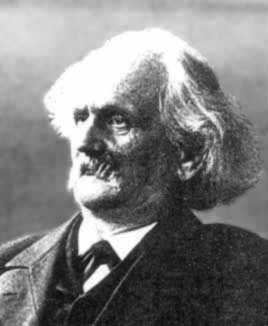
Neumann polynomials
Neumann polynomials is a polynomial sequence.
All 3 facts, and where they come from
Facts
3 facts · 0 confirmed by two sources · 0 cited · 3 from one source
Where this comes from
Papalocal keeps its own record. It started from these sources; what each one said is kept here as it was copied, so a change on their side never changes this page by itself. Tap one to read its version.
What Wikidata says · copied November 18, 2026 · revision 2541091516
- Described as
- polynomial sequence
- What it is
- polynomial sequence; mathematical concept
- Named after
- Carl Neumann
- Wikipedias with a page
- 5
Wikidata item Q7001952 (wikidata.org/wiki/Q7001952), public domain (CC0). Copied 2026-11-18.
What Wikipedia says · copied November 18, 2026 · revision 1381603038
In mathematics, the Neumann polynomials, introduced by Carl Neumann for the special case α=0, are a sequence of polynomials in 1/t used to expand functions in term of Bessel functions.
The first few polynomials areO0(α)(t)=1t,
O1(α)(t)=2α+1t2,
O2(α)(t)=2+αt+4(2+α)(1+α)t3,
O3(α)(t)=2(1+α)(3+α)t2+8(1+α)(2+α)(3+α)t4,
O4(α)(t)=(1+α)(4+α)2t+4(1+α)(2+α)(4+α)t3+16(1+α)(2+α)(3+α)(4+α)t5.
A general form for the polynomial isOn(α)(t)=α+n2α∑k=0⌊n/2⌋(−1)n−k(n−k)!k!(−αn−k)(2t)n+1−2k,
and they have the "generating function"(z2)αΓ(α+1)1t−z=∑n=0On(α)(t)Jα+n(z),
where J are Bessel functions.
To expand a function f in the formf(z)=(2z)α∑n=0anJα+n(z)
for |t|<c, computean=Γ(α+1)2πi∮|t|=c′f(t)On(α)(t)dt,
where c′<c and c is the distance of the nearest singularity of f(z) from z=0.
From the Wikipedia article “Neumann polynomial” (en.wikipedia.org/wiki/Neumann_polynomial), by its contributors, under CC BY-SA 4.0 (creativecommons.org/licenses/by-sa/4.0/). Copied 2026-11-18; not changed.
Confirmed Two sources agree. Cited One source, and it names where it got it. One source One source, without a reference of its own. Sources disagree The sources disagree. We show the best-supported value and keep theirs below.