Neumann series
Neumann series is a mathematical series.
All 1 facts, and where they come from
Facts
1 facts · 0 confirmed by two sources · 0 cited · 1 from one source
Where this comes from
Papalocal keeps its own record. It started from these sources; what each one said is kept here as it was copied, so a change on their side never changes this page by itself. Tap one to read its version.
What Wikidata says · copied November 18, 2026 · revision 2541091407
- Described as
- mathematical series
- What it is
- mathematical concept
- Wikipedias with a page
- 11
Wikidata item Q584910 (wikidata.org/wiki/Q584910), public domain (CC0). Copied 2026-11-18.
What Wikipedia says · copied November 18, 2026 · revision 1311609267
A Neumann series is a mathematical series that sums k-times repeated applications of an operator T. This has the generator form
∑k=0∞Tk
where Tk is the k-times repeated application of T; T0 is the identity operator I and Tk:=Tk−1∘T for k>0. This is a special case of the generalization of a geometric series of real or complex numbers to a geometric series of operators. The generalized initial term of the series is the identity operator T0=I and the generalized common ratio of the series is the operator T.
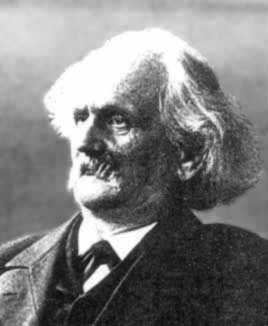
The series is named after the mathematician Carl Neumann, who used it in 1877 in the context of potential theory. The Neumann series is used in functional analysis. It is closely connected to the resolvent formalism for studying the spectrum of bounded operators and, applied from the left to a function, it forms the Liouville-Neumann series that formally solves Fredholm integral equations.
From the Wikipedia article “Neumann series” (en.wikipedia.org/wiki/Neumann_series), by its contributors, under CC BY-SA 4.0 (creativecommons.org/licenses/by-sa/4.0/). Copied 2026-11-18; not changed.
Confirmed Two sources agree. Cited One source, and it names where it got it. One source One source, without a reference of its own. Sources disagree The sources disagree. We show the best-supported value and keep theirs below.