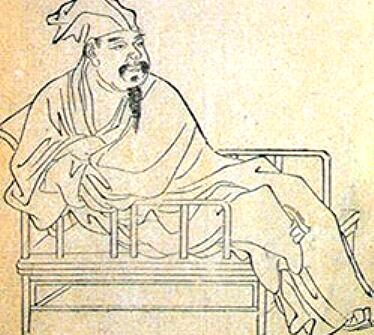
New Book of Tang
New Book of Tang is a 11th-century Chinese history book. It came out in 1060. It is part of Twenty-Four Histories.
- Published
- 1060
- Genre
- jizhuanti
- Country of origin
- Northern Song dynasty
All 8 facts, and where they come from
Facts
8 facts · 0 confirmed by two sources · 0 cited · 8 from one source
Where this comes from
Papalocal keeps its own record. It started from these sources; what each one said is kept here as it was copied, so a change on their side never changes this page by itself. Tap one to read its version.
What Wikidata says · copied November 17, 2026 · revision 2550846208
- Described as
- 11th-century Chinese history book
- Other names
- Book of Tang, Annals of Tang, Book of T'ang, Annals of T'ang, Book of Thang, Annals of Thang, Xin Tang Shu, Hsin T'angshu, Tángshū, T'angshu, Xin Tangshu
- What it is
- literary work
- Genre
- jizhuanti; dynastic history
- Published
- 1060
- Language
- Middle Chinese; Classical Chinese
- Country of origin
- Northern Song dynasty
- Part of the series
- Twenty-Four Histories
- Wikipedias with a page
- 24
Wikidata item Q386073 (wikidata.org/wiki/Q386073), public domain (CC0). Copied 2026-11-17.
What Wikipedia says · copied November 17, 2026 · revision 1378211101
The New Book of Tang, generally translated as the "New History of the Tang" or "New Tang History", is a work of official history covering the Tang dynasty in ten volumes and 225 chapters. The work was compiled by a team of scholars of the Song dynasty, led by Ouyang Xiu and Song Qi.
It was originally simply called the Tangshu (唐書, Book of Tang) until the 18th century.
From the Wikipedia article “New Book of Tang” (en.wikipedia.org/wiki/New_Book_of_Tang), by its contributors, under CC BY-SA 4.0 (creativecommons.org/licenses/by-sa/4.0/). Copied 2026-11-17; not changed.
Confirmed Two sources agree. Cited One source, and it names where it got it. One source One source, without a reference of its own. Sources disagree The sources disagree. We show the best-supported value and keep theirs below.