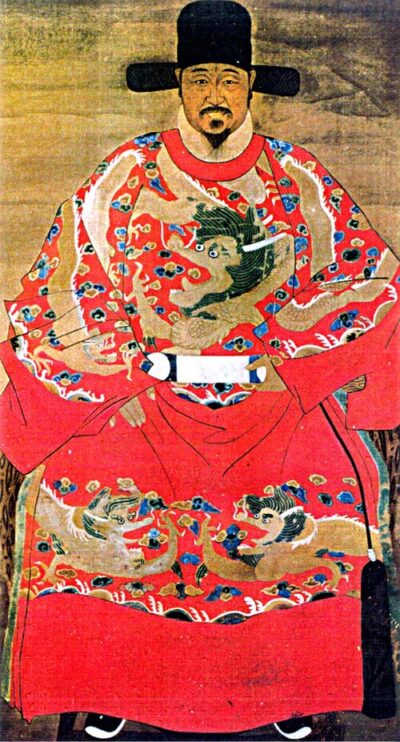
New Treatise on Military Efficiency
New Treatise on Military Efficiency is a 16th century Chinese military manual by Qi Jiguang.
- Published
- 16th century
- Written by
- Qi Jiguang
- Country of origin
- Ming dynasty
All 4 facts, and where they come from
Facts
4 facts · 0 confirmed by two sources · 0 cited · 4 from one source
Where this comes from
Papalocal keeps its own record. It started from these sources; what each one said is kept here as it was copied, so a change on their side never changes this page by itself. Tap one to read its version.
What Wikidata says · copied November 17, 2026 · revision 2463348144
- Described as
- 16th century Chinese military manual by Qi Jiguang
- Other names
- Ji Xiao Xin Shu, Jixiao Xinshu
- What it is
- literary work
- Written by
- Qi Jiguang
- Published
- 16th century
- Country of origin
- Ming dynasty
- Wikipedias with a page
- 13
Wikidata item Q956915 (wikidata.org/wiki/Q956915), public domain (CC0). Copied 2026-11-17.
What Wikipedia says · copied November 17, 2026 · revision 1376650472
The Jixiao Xinshu (simplified Chinese: 纪效新书; traditional Chinese: 紀效新書; pinyin: Jìxiào xīnshū) or New Treatise on Military Efficiency is a military manual written during the 1560s and 1580s by the Ming dynasty general Qi Jiguang. Its primary significance is in advocating for a combined arms approach to warfare using five types of infantry and two type of support. Qi Jiguang separated infantry into five separate categories: firearms, swordsmen, archers with fire arrows, ordinary archers, and spearmen. He split support crews into horse archers and artillery units. The Jixiao Xinshu is also one of the earliest-existing East Asian texts to address the relevance of Chinese martial arts with respect to military training and warfare. Several contemporary martial arts styles of Qi's era are mentioned in the book, including the staff method of the Shaolin temple.
From the Wikipedia article “Jixiao Xinshu” (en.wikipedia.org/wiki/Jixiao_Xinshu), by its contributors, under CC BY-SA 4.0 (creativecommons.org/licenses/by-sa/4.0/). Copied 2026-11-17; not changed.
Confirmed Two sources agree. Cited One source, and it names where it got it. One source One source, without a reference of its own. Sources disagree The sources disagree. We show the best-supported value and keep theirs below.
Picture: Wikimedia Commons: Mandarin Duck Formation.jpg · See Commons file page