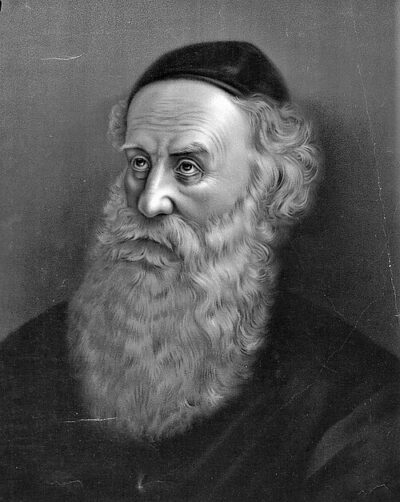
Niggun of Four Stanzas
Niggun of Four Stanzas is a Niggun of the Chabad-Lubavitch Hasidim. It was written by Shneur Zalman of Liadi.
- Written by
- Shneur Zalman of Liadi
- Genre
- Chabad niggunim
All 5 facts, and where they come from
Facts
5 facts · 0 confirmed by two sources · 0 cited · 5 from one source
Where this comes from
Papalocal keeps its own record. It started from these sources; what each one said is kept here as it was copied, so a change on their side never changes this page by itself. Tap one to read its version.
What Wikidata says · copied November 18, 2026 · revision 2570699794
- Described as
- Niggun of the Chabad-Lubavitch Hasidim
- Other names
- Niggun Arba Bavos, Nigun Arba Bavos, Nigun of Four Stanzas
- What it is
- Chabad niggunim; musical work/composition
- Written by
- Shneur Zalman of Liadi
- Music by
- Shneur Zalman of Liadi
- Genre
- Chabad niggunim
- Wikipedias with a page
- 2
Wikidata item Q6259139 (wikidata.org/wiki/Q6259139), public domain (CC0). Copied 2026-11-18.
What Wikipedia says · copied November 18, 2026 · revision 1313586651
The Niggun of Four Stanzas or the Niggun of Daled Bavos ("Niggun of Four Gates"), is a wordless tune of the Chabad-Lubavitch Hasidim, composed by the first Rebbe of Chabad-Lubavitch, Rabbi Schneur Zalman of Liadi.
The Niggun of Four Stanzas is of a slower tempo and in a minor key, characteristic of meditative "dveikus niggunim." However, while serious in nature, it is not necessarily intended to be a sad song. Rather, the niggun is intended to lift the singer and the listener to each of the four spiritual worlds of Asiyah, Yetzirah, Beriah and Atzilus, and in fact, the four sections of the niggun correspond to these four worlds. It holds a special place among Chabad niggunim, and is only sung at special occasions, such as during the High Holidays, Yud-Tes Kislev and weddings.
From the Wikipedia article “Niggun of Four Stanzas” (en.wikipedia.org/wiki/Niggun_of_Four_Stanzas), by its contributors, under CC BY-SA 4.0 (creativecommons.org/licenses/by-sa/4.0/). Copied 2026-11-18; not changed.
Confirmed Two sources agree. Cited One source, and it names where it got it. One source One source, without a reference of its own. Sources disagree The sources disagree. We show the best-supported value and keep theirs below.