
Norwegian Labour Party
The Norwegian Labour Party is a centre-left Norwegian political party. It was founded in 1887. Its headquarters are in Oslo. It has 51 employees (2026). It stands for social democracy.
- Country
- Norway
- Founded
- August 22, 1887
- Ideology
- social democracy
All 10 facts, and where they come from
Facts
10 facts · 0 confirmed by two sources · 3 cited · 7 from one source
Where this comes from
Papalocal keeps its own record. It started from these sources; what each one said is kept here as it was copied, so a change on their side never changes this page by itself. Tap one to read its version.
What Wikidata says · copied November 16, 2026 · revision 2557220226
- Described as
- centre-left Norwegian political party
- Other names
- Labour Party, Arbeidarpartiet, Arbeiderpartiet
- What it is
- social democratic party
- Founded
- August 22, 1887
- Headquarters
- Oslo
- Country
- Norway
- Industry
- Activities of political organisations · 1 reference
- Chair
- Anders Andersen (1887–1888); Hans G. Jensen (1888–1889)
- Employees
- 51 (2026) · 1 reference
- Ideology
- social democracy · 1 reference
- Official website
- https://arbeiderpartiet.no
- Wikipedias with a page
- 54
Wikidata item Q190219 (wikidata.org/wiki/Q190219), public domain (CC0). Copied 2026-11-16.
What Wikipedia says · copied November 16, 2026 · revision 1370925731
The Labour Party (Bokmål: Arbeiderpartiet; Nynorsk: Arbeidarpartiet, A or Ap; Northern Sami: Bargiidbellodat), formerly The Norwegian Labour Party (Norwegian: Det norske Arbeiderparti, DNA), is a social democratic political party in Norway. It is positioned on the centre-left of the political spectrum, and is led by Jonas Gahr Støre, the current Prime Minister of Norway.
The Labour Party is officially committed to social-democratic ideals. Its slogan is "safety for the future" (trygghet for framtida) and the party traditionally seeks a strong welfare state, funded through taxes and duties. Since the 1980s, the party has included more of the principles of a social market economy in its policy, allowing for privatisation of state-owned assets and services and reducing income tax progressivity, following the wave of economic liberalisation during the 1980s. During the first Stoltenberg government, the party's policies were inspired by Tony Blair's New Labour agenda in the United Kingdom and saw the most widespread privatisation by any government in Norway to that date. The party has frequently been described as increasingly neoliberal since the 1980s, both by political scientists and opponents on the political left. The Labour Party profiles itself as a progressive party that subscribes to co-operation on a national as well as international level.
Its youth wing is the Workers' Youth League. The party is a member of the Party of European Socialists and the Progressive Alliance. It was formerly a member of the Comintern (1919–1923), the International Revolutionary Marxist Centre (1932–1935), the Labour and Socialist International (1938–1940), and the Socialist International (1951–2016). The Labour Party has always been a strong supporter of Norwegian NATO membership and has supported Norway joining the European Union during two referendums. During the Cold War, when the party was in government most of the time, the party closely aligned Norway with the United States at the international level and followed an anti-communist policy at the domestic level in the aftermath of the 1948 Kråkerøy speech and culminating in Norway becoming a founding member of NATO in 1949.
Founded in 1887, the party steadily increased in support until it became the largest party in Norway at the 1927 parliamentary election, a position it has held ever since. That year also saw the consolidation of conflicts surrounding the party during the 1920s following its membership in the Comintern. It first formed a government in 1928 and has led the government for all but sixteen years since 1935. From 1945 to 1961, the party had an absolute majority in the Norwegian Parliament, to date the last time this has happened in the history of Norway. The electoral domination by the Labour Party during the 1960s and early 1970s was initially broken by competition from smaller left-wing parties, primarily from the Socialist People's Party. From the late 1970s, the party started to lose voters due to a rise in right-wing parties, leading to a swing to the right for the Labour Party under Gro Harlem Brundtland during the 1980s. In 2001, the party achieved its worst result since 1924. Between 2005 and 2013, Labour returned to power after committing to a coalition agreement with other parties in order to form a majority government. Labour entered opposition again after losing nine seats in 2013. The party lost a further six seats in 2017, yielding the second-lowest number of seats since 1924. Since the 2021 and 2025 elections, Labour has headed a minority government.
From the Wikipedia article “Labour Party (Norway)” (en.wikipedia.org/wiki/Labour_Party_(Norway)), by its contributors, under CC BY-SA 4.0 (creativecommons.org/licenses/by-sa/4.0/). Copied 2026-11-16; not changed.
Confirmed Two sources agree. Cited One source, and it names where it got it. One source One source, without a reference of its own. Sources disagree The sources disagree. We show the best-supported value and keep theirs below.
People connected 6
Party members
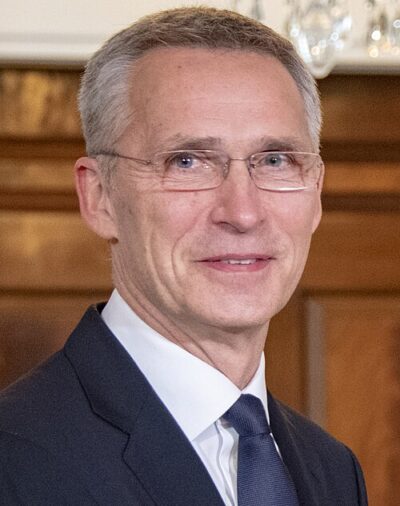 Jens Stoltenberg (1973–)Norwegian politician (born 1959)
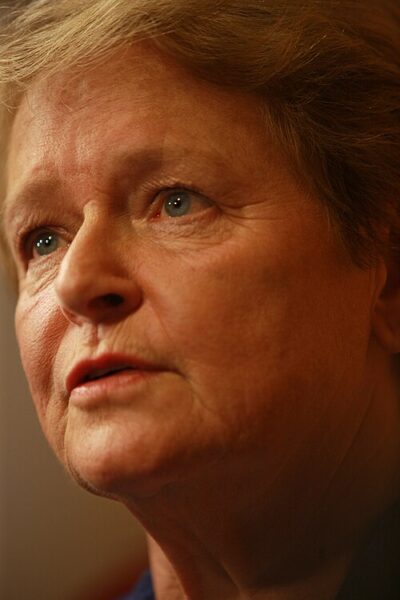 Gro Harlem Brundtland29th Prime Minister of Norway
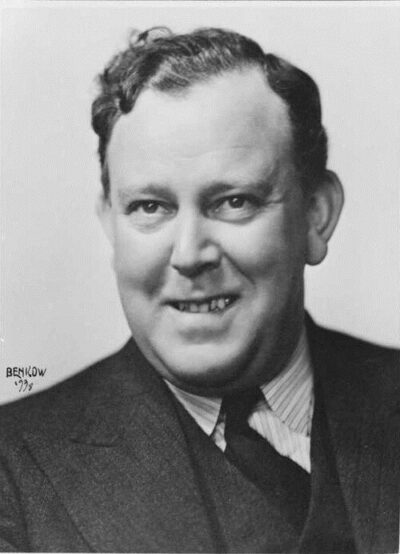 Trygve Lie1st Secretary-General of the United Nations (1896–1968)
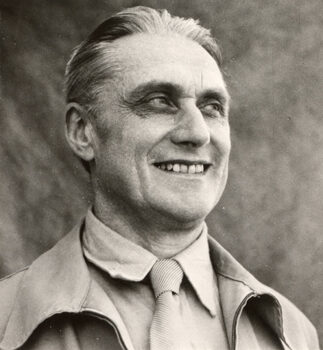 Ragnar FrischNorwegian economist (1895–1973)
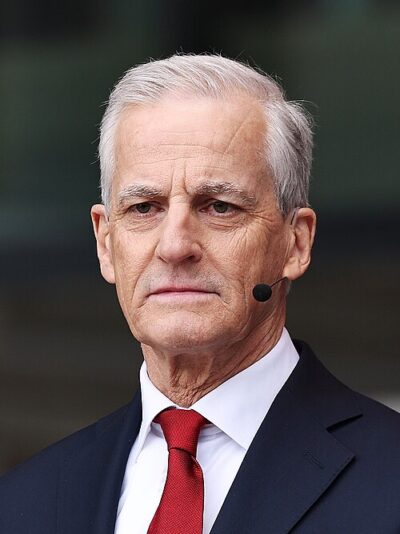 Jonas Gahr Støre (1995–)Prime Minister of Norway since 2021
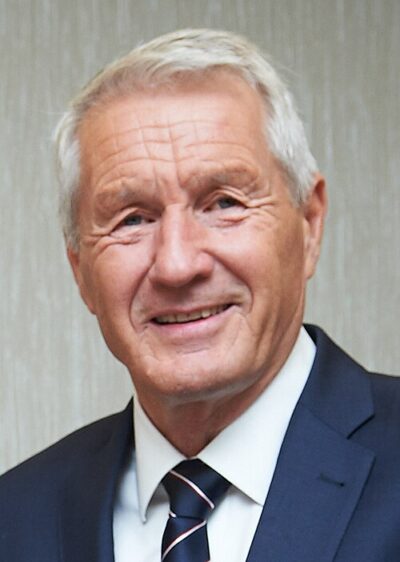 Thorbjørn Jagland32nd Prime Minister of Norway
