O le Ao o le Malo
O le Ao o le Malo is a head of state of the Independent State of Samoa. It was created in 1962.
All 4 facts, and where they come from
Facts
4 facts · 0 confirmed by two sources · 0 cited · 4 from one source
Where this comes from
Papalocal keeps its own record. It started from these sources; what each one said is kept here as it was copied, so a change on their side never changes this page by itself. Tap one to read its version.
What Wikidata says · copied November 17, 2026 · revision 2560178738
- Described as
- head of state of the Independent State of Samoa
- Other names
- head of state of Samoa, Samoan head of state
- What it is
- position
- Created
- January 1, 1962
- Country
- Samoa
- Office of
- Samoa
- Wikipedias with a page
- 30
Wikidata item Q1258128 (wikidata.org/wiki/Q1258128), public domain (CC0). Copied 2026-11-17.
What Wikipedia says · copied November 17, 2026 · revision 1381304253
The O le Ao o le Malo (Samoan for 'chief of state') is the head of state of Samoa. The office is equivalent to a ceremonial president in parliamentary republics. The title is usually translated into English as Head of State or by the initialism HOS.
At the time the constitution was adopted, it was anticipated that future heads of state would be chosen from among the four tamaʻāiga paramount chieftains in line with customary protocol. However, this is not a constitutional requirement. Since the election is not restricted to the "royal" lineages and is done by the country's elected parliament, Samoa is considered a elective monarchy along the lines of Malaysia or the UAE. The government press secretariat describes the O le Ao o le Malo as a "ceremonial president". Similar to monarchs, the holder is given the formal style of His Highness, as is the case with the four tamaʻāiga.
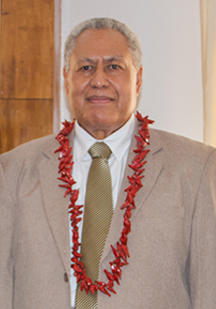
The Council of Deputies collectively acts as the deputy to the head of state, substituting in the event of a vacancy or when the head of state cannot otherwise fulfill their duties. The incumbent head of state is Tuimalealiʻifano Vaʻaletoʻa Sualauvi II, who was elected to a five-year term in 2017 and re-elected in 2022.
From the Wikipedia article “O le Ao o le Malo” (en.wikipedia.org/wiki/O_le_Ao_o_le_Malo), by its contributors, under CC BY-SA 4.0 (creativecommons.org/licenses/by-sa/4.0/). Copied 2026-11-17; not changed.
Confirmed Two sources agree. Cited One source, and it names where it got it. One source One source, without a reference of its own. Sources disagree The sources disagree. We show the best-supported value and keep theirs below.