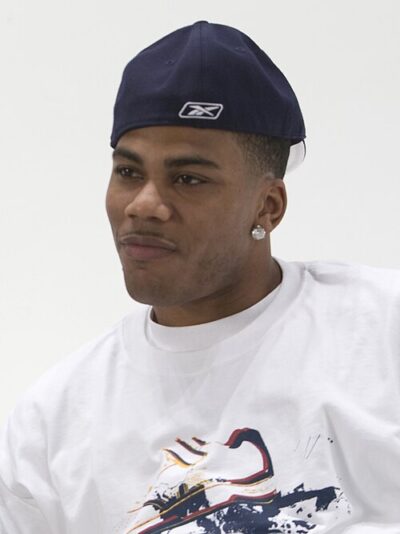
Ocean's 7
Ocean's 7 is an American musical group.
- Country of origin
- United States
All 2 facts, and where they come from
Facts
2 facts · 0 confirmed by two sources · 0 cited · 2 from one source
Where this comes from
Papalocal keeps its own record. It started from these sources; what each one said is kept here as it was copied, so a change on their side never changes this page by itself. Tap one to read its version.
What Wikidata says · copied November 16, 2026 · revision 2490866305
- Described as
- American musical group
- Other names
- Ocean's 5
- What it is
- musical group
- Country of origin
- United States
- Wikipedias with a page
- 1
Wikidata item Q24884960 (wikidata.org/wiki/Q24884960), public domain (CC0). Copied 2026-11-16.
What Wikipedia says · copied November 16, 2026 · revision 1370227121
Ocean's 7 is an American musical collective composed of singer-songwriters, record producers, and rappers consisted of Jermaine Dupri, Bryan Michael-Cox, Johntá Austin, Usher, Nelly, Trey Songz, and Dupri's assistant Tyrone. The group released the mixtape 3000 And 9 Shit, on May 5, 2009. Formed by Dupri in 1989, the group was modeled after the Rat Pack in the film Ocean's 11. Like the Rat Pack, the group's initial members, Dupri, Michael-Cox, and Austin are all associates and have teamed up to write and produce various hit singles for several artists in their careers.
Often the team works together or just in a pairing. Their most notable productions are "U Got It Bad", "Burn" "Confessions Part II" by fellow member Usher, "Be Without You" by Mary J. Blige, "Everytime tha Beat Drop", "Love All Over Me" by Monica, "Like You", "Outta My System" and "Shorty Like Mine" by Bow Wow, and "We Belong Together", "Don't Forget About Us", "It's Like That", "Shake It Off", "I Stay in Love" and "You Don't Know What to Do" for Mariah Carey.
From the Wikipedia article “Ocean's 7” (en.wikipedia.org/wiki/Ocean's_7), by its contributors, under CC BY-SA 4.0 (creativecommons.org/licenses/by-sa/4.0/). Copied 2026-11-16; not changed.
Confirmed Two sources agree. Cited One source, and it names where it got it. One source One source, without a reference of its own. Sources disagree The sources disagree. We show the best-supported value and keep theirs below.