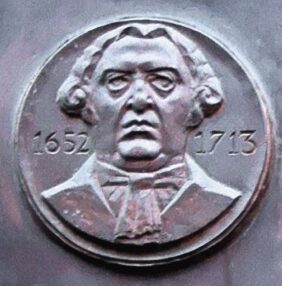
Odiljenje sigetsko
Odiljenje sigetsko is a poem by Pavao Ritter Vitezović. It came out in 1684.
- Published
- 1684
- Written by
- Pavao Ritter Vitezović
All 4 facts, and where they come from
Facts
4 facts · 0 confirmed by two sources · 4 cited · 0 from one source
Where this comes from
Papalocal keeps its own record. It started from these sources; what each one said is kept here as it was copied, so a change on their side never changes this page by itself. Tap one to read its version.
What Wikidata says · copied November 19, 2026 · revision 2326298957
- Described as
- poem by Pavao Ritter Vitezović
- What it is
- literary work · 1 reference
- Written by
- Pavao Ritter Vitezović · 1 reference
- Published
- 1684 · 1 reference
- Language
- Croatian · 1 reference
- Wikipedias with a page
- 2
Wikidata item Q96397142 (wikidata.org/wiki/Q96397142), public domain (CC0). Copied 2026-11-19.
What Wikipedia says · copied November 19, 2026 · revision 1384465792
Odiljenje sigetsko (English: Farewell at Siget) is an intertextual poetic work by Pavao Ritter Vitezović first published in 1684. It is regarded as the first and most important vernacular piece by the author. Odiljenje sigetsko was written sometime between 1679 and 1682 and covers the 1566 Siege of Szigetvar relying on previous adaptations of the same subject.
Being particularly notable for its unusual form, there is a distinct lack of discernable classification regarding its genre, which often led to debates among literary historians. It is sometimes described as a "mosaic" incorporating a vast array of literary elements and devices, with a fragmented form. It was well received by its contemporaries, subsequently inspiring a number of authors in the 18th century.
From the Wikipedia article “Odiljenje sigetsko” (en.wikipedia.org/wiki/Odiljenje_sigetsko), by its contributors, under CC BY-SA 4.0 (creativecommons.org/licenses/by-sa/4.0/). Copied 2026-11-19; not changed.
Confirmed Two sources agree. Cited One source, and it names where it got it. One source One source, without a reference of its own. Sources disagree The sources disagree. We show the best-supported value and keep theirs below.