Olbers's paradox
Olbers's paradox is a cosmological contradiction between the observed darkness of the night sky and a static universe model.
All 2 facts, and where they come from
Facts
2 facts · 0 confirmed by two sources · 0 cited · 2 from one source
Where this comes from
Papalocal keeps its own record. It started from these sources; what each one said is kept here as it was copied, so a change on their side never changes this page by itself. Tap one to read its version.
What Wikidata says · copied November 17, 2026 · revision 2511953959
- Described as
- cosmological contradiction between the observed darkness of the night sky and a static universe model
- Other names
- dark night sky paradox, photometric paradox, Olbers paradox
- What it is
- logical contradiction
- Named after
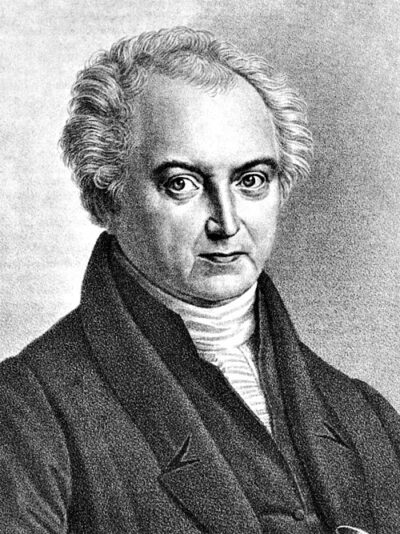
- Heinrich Wilhelm Olbers
- Wikipedias with a page
- 44
Wikidata item Q33558 (wikidata.org/wiki/Q33558), public domain (CC0). Copied 2026-11-17.
What Wikipedia says · copied November 17, 2026 · revision 1373389335
Olbers' paradox, also known as the dark night paradox or Olbers and Cheseaux's paradox, is a historical argument in astrophysics and physical cosmology that says the darkness of the night sky conflicts with the assumption of an infinite and eternal static universe. If the universe were static, homogeneous at a large scale, and populated by an infinite number of stars, any line of sight from Earth must end at the surface of a star and if light from an infinite distance could reach Earth, the night sky should be completely illuminated and very bright. This contradicts the observed darkness and non-uniformity of the night sky. Modern cosmological models do not make all of these assumptions.
The darkness of the night sky is one piece of evidence for a dynamic universe, such as the Big Bang model. That model explains the observed darkness by invoking expansion of the universe, which increases the wavelength of visible light originating from the Big Bang to microwave scale via a process known as redshift. The resulting microwave radiation background has wavelengths much longer (millimeters instead of nanometers), which appear dark to the naked eye. Although he was not the first to describe it, the paradox is popularly named after the German astronomer Heinrich Wilhelm Olbers (1758–1840).
From the Wikipedia article “Olbers' paradox” (en.wikipedia.org/wiki/Olbers'_paradox), by its contributors, under CC BY-SA 4.0 (creativecommons.org/licenses/by-sa/4.0/). Copied 2026-11-17; not changed.
Confirmed Two sources agree. Cited One source, and it names where it got it. One source One source, without a reference of its own. Sources disagree The sources disagree. We show the best-supported value and keep theirs below.
Picture: Wikimedia Commons: Olbers Paradox Pinus pinaster.jpg · See Commons file page