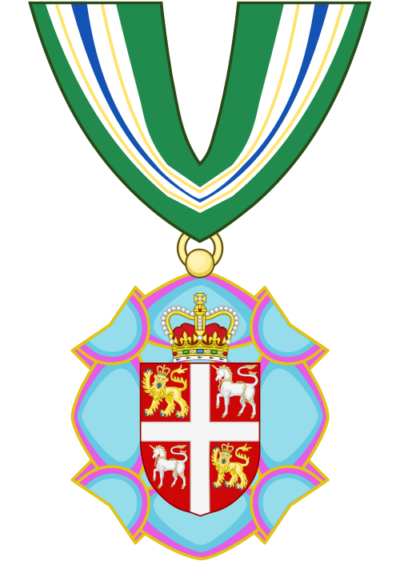
Order of Newfoundland and Labrador
Order of Newfoundland and Labrador is an order administered by the Protocol Office of the Government of Newfoundland and Labrador in Canada. It was created in 2001 by Arthur Maxwell House.
- Country
- Canada
- Created
- May 24, 2001
All 7 facts, and where they come from
Facts
7 facts · 0 confirmed by two sources · 2 cited · 5 from one source
Where this comes from
Papalocal keeps its own record. It started from these sources; what each one said is kept here as it was copied, so a change on their side never changes this page by itself. Tap one to read its version.
What Wikidata says · copied November 17, 2026 · revision 2515514457
- Described as
- order administered by the Protocol Office of the Government of Newfoundland and Labrador in Canada
- Other names
- ONL
- What it is
- state order
- Comes after
- Order of Nova Scotia · 1 reference
- Followed by
- Order of Nunavut · 1 reference
- Created
- May 24, 2001
- Founded by
- Arthur Maxwell House · 1 reference
- Country
- Canada
- Office of
- Newfoundland and Labrador
- Wikipedias with a page
- 5
Wikidata item Q512464 (wikidata.org/wiki/Q512464), public domain (CC0). Copied 2026-11-17.
What Wikipedia says · copied November 17, 2026 · revision 1371104064
The Order of Newfoundland and Labrador is a civilian honour for merit in the Canadian province of Newfoundland and Labrador. Instituted in 2001, when Lieutenant Governor Arthur Maxwell House granted royal assent to the Order of Newfoundland and Labrador Act, the order is administered by the Governor-in-Council and is intended to honour current or former Newfoundland and Labrador residents for conspicuous achievements in any field, being thus described as the highest honour amongst all others conferred by the Newfoundland and Labrador Crown.
From the Wikipedia article “Order of Newfoundland and Labrador” (en.wikipedia.org/wiki/Order_of_Newfoundland_and_Labrador), by its contributors, under CC BY-SA 4.0 (creativecommons.org/licenses/by-sa/4.0/). Copied 2026-11-17; not changed.
Confirmed Two sources agree. Cited One source, and it names where it got it. One source One source, without a reference of its own. Sources disagree The sources disagree. We show the best-supported value and keep theirs below.
Picture: ConfidentBobcat, via Wikimedia Commons · CC BY-SA 4.0