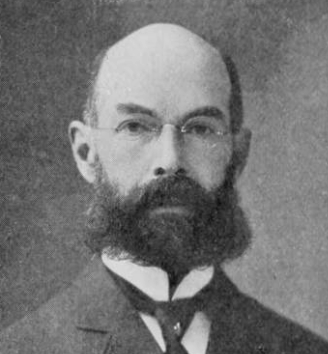
Osgood's lemma
Osgood's lemma is a proposition in complex analysis.
All 3 facts, and where they come from
Facts
3 facts · 0 confirmed by two sources · 0 cited · 3 from one source
Where this comes from
Papalocal keeps its own record. It started from these sources; what each one said is kept here as it was copied, so a change on their side never changes this page by itself. Tap one to read its version.
What Wikidata says · copied November 19, 2026 · revision 2521736051
- Described as
- proposition in complex analysis
- What it is
- lemma; theorem
- Named after
- William Fogg Osgood
- Wikipedias with a page
- 8
Wikidata item Q7106530 (wikidata.org/wiki/Q7106530), public domain (CC0). Copied 2026-11-19.
What Wikipedia says · copied November 19, 2026 · revision 1363604381
In mathematics, specifically complex analysis, Osgood's lemma states that a continuous function of several complex variables that is holomorphic in each variable separately is itself holomorphic. It was introduced by William Fogg Osgood in 1899.
The assumption that the function is continuous can be dropped, but that form of the lemma is much harder to prove and is known as Hartogs' theorem.
There is no analogue of this result for real variables. If it is assumed that a function f:ℝn→ℝ is globally continuous and separately differentiable on each variable (all partial derivatives exist everywhere), it is not true that f will necessarily be differentiable. A counterexample in two dimensions is given byf(x,y)=2x2y+y3x2+y2.
If in addition it is defined that f(0,0)=0, this function is everywhere continuous and has well-defined partial derivatives in x and y everywhere (also at the origin), but is not differentiable at the origin.
From the Wikipedia article “Osgood's lemma” (en.wikipedia.org/wiki/Osgood's_lemma), by its contributors, under CC BY-SA 4.0 (creativecommons.org/licenses/by-sa/4.0/). Copied 2026-11-19; not changed.
Confirmed Two sources agree. Cited One source, and it names where it got it. One source One source, without a reference of its own. Sources disagree The sources disagree. We show the best-supported value and keep theirs below.