Otechestvennye Zapiski
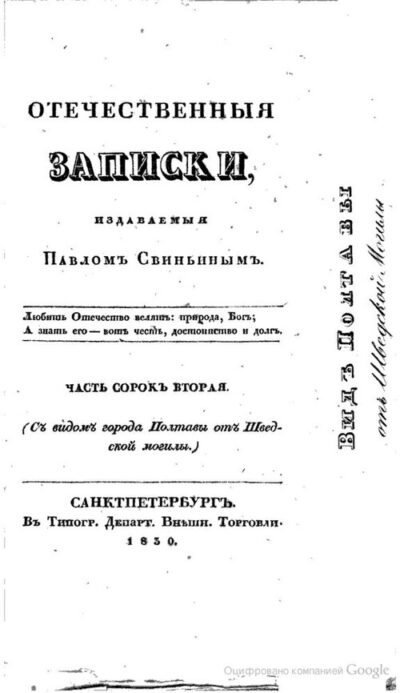
Otechestvennye Zapiski is a Russian literary magazine (1856—1906). It was founded in 1818 by Pavel Svinyin. Its headquarters are in Saint Petersburg.
- Founded
- 1818
- Founded by
- Pavel Svinyin
- Headquarters
- Saint Petersburg
- Country
- Russian Empire
All 11 facts, and where they come from
Facts
11 facts · 0 confirmed by two sources · 0 cited · 11 from one source
Where this comes from
Papalocal keeps its own record. It started from these sources; what each one said is kept here as it was copied, so a change on their side never changes this page by itself. Tap one to read its version.
What Wikidata says · copied November 17, 2026 · revision 2538171745
- Described as
- Russian literary magazine (1856—1906)
- What it is
- magazine
- Publisher
- Pavel Svinyin; Andrey Krayevsky (1839–) · 1 reference
- Language
- Russian
- Country of origin
- Russian Empire
- Founded
- 1818
- Ended
- 1884
- Founded by
- Pavel Svinyin
- Headquarters
- Saint Petersburg · 1 reference
- Country
- Russian Empire · 1 reference
- Field
- literary magazine
- Wikipedias with a page
- 16
Wikidata item Q2661947 (wikidata.org/wiki/Q2661947), public domain (CC0). Copied 2026-11-17.
What Wikipedia says · copied November 17, 2026 · revision 1368985393
Otechestvennye Zapiski (Russian: Отечественные записки, IPA: [ɐˈtʲetɕɪstvʲɪnːɨjɪ zɐˈpʲiskʲɪ], variously translated as "Annals of the Fatherland", "Patriotic Notes", "Notes of the Fatherland", etc.) was a Russian literary magazine published in Saint Petersburg on a monthly basis between 1818 and 1884. The journal served liberal-minded readers known as the intelligentsia. Such major novels as Ivan Goncharov's Oblomov (1859), Fyodor Dostoyevsky's The Double (1846) and The Adolescent (1875) and Mikhail Saltykov-Shchedrin's The Golovlyov Family (1880) made their first appearance in Otechestvennye Zapiski.
Founded by Pavel Svinyin in 1818, the journal was published irregularly until 1820. It was closed down in 1830 but resurfaced several years later, with Andrey Krayevsky as its publisher. The renovated magazine regularly published articles by Vissarion Belinsky and Alexander Herzen, catering to well-educated liberals. Other notable contributors included:Mikhail Bakunin
Timofey Granovsky
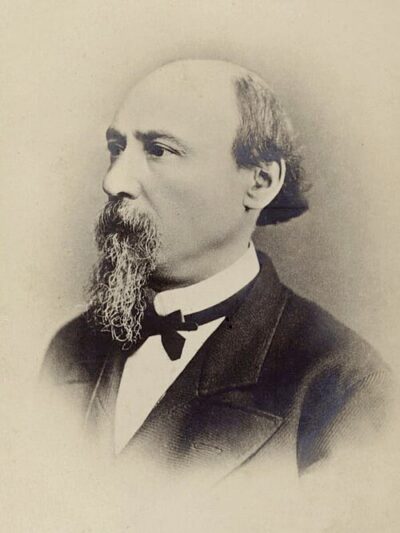
Nikolay Nekrasov
Ivan Turgenev
Vladimir Dahl
Vladimir Odoyevsky
Aleksey Pisemsky
Afanasy Fet
In 1846 Nekrasov persuaded Belinsky and other contributors to leave Otechestvennye Zapiski for his own Sovremennik. As a result, the former declined in circulation and influence. It was overshadowed by the more radical Sovremennik for 20 years, until the latter was banned in 1866.
In 1868 Nekrasov acquired Otechestvennye Zapiski from Krayevsky and started editing it jointly with Saltykov-Shchedrin. After Nekrasov's death Saltykov-Schedrin was its sole editor-in-chief, radicalizing the journal even further. In the 1870s it was transformed into a mouthpiece of the Narodnik movement.
Despite Saltykov's mastery of "Aesopian" language, the tsarist authorities closed Otechestvennye zapiski in 1884 as "an organ of the press which not only opens its pages to the spread of dangerous ideas, but even has as its closest collaborators people who belong to secret societies".
From the Wikipedia article “Otechestvennye Zapiski” (en.wikipedia.org/wiki/Otechestvennye_Zapiski), by its contributors, under CC BY-SA 4.0 (creativecommons.org/licenses/by-sa/4.0/). Copied 2026-11-17; not changed.
Confirmed Two sources agree. Cited One source, and it names where it got it. One source One source, without a reference of its own. Sources disagree The sources disagree. We show the best-supported value and keep theirs below.
Picture: Редакция журнала, via Wikimedia Commons · Public domain