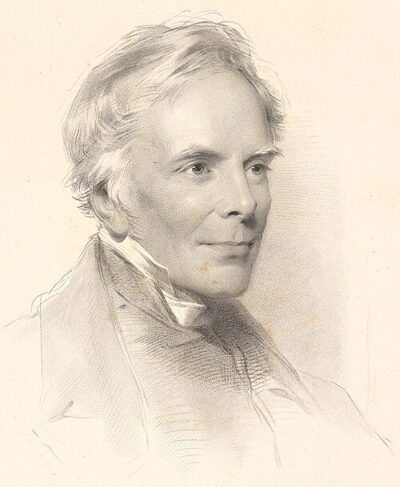
Oxford Movement
The Oxford Movement is a movement of High Church members of the Church of England which eventually developed into Anglo-Catholicism.
- Country
- United Kingdom of Great Britain and Ireland
All 2 facts, and where they come from
Facts
2 facts · 0 confirmed by two sources · 0 cited · 2 from one source
Where this comes from
Papalocal keeps its own record. It started from these sources; what each one said is kept here as it was copied, so a change on their side never changes this page by itself. Tap one to read its version.
What Wikidata says · copied November 19, 2026 · revision 2549926604
- Described as
- movement of High Church members of the Church of England which eventually developed into Anglo-Catholicism
- Other names
- Tractarianism, Tractarians, Oxford school, Puseyism
- What it is
- religious movement
- Country
- United Kingdom of Great Britain and Ireland
- Wikipedias with a page
- 24
Wikidata item Q1137662 (wikidata.org/wiki/Q1137662), public domain (CC0). Copied 2026-11-19.
What Wikipedia says · copied November 19, 2026 · revision 1369809349
The Oxford Movement was a theological movement of high-church members of the Church of England which began in the 1830s and eventually developed into Anglo-Catholicism. The movement, whose original devotees were mostly associated with the University of Oxford, argued for the reinstatement of some older Christian traditions of faith and their inclusion into Anglican liturgy and theology. They thought of Anglicanism as one of three branches of the "one, holy, catholic, and apostolic" Christian Church. Many key participants subsequently converted to Catholicism.
Tractarianism, the movement's philosophy, was named after a series of publications, the Tracts for the Times, written to promote the movement. Tractarians were often disparagingly referred to as "Newmanites" (before 1845) and "Puseyites", after two prominent Tractarians, John Henry Newman and Edward Bouverie Pusey. Other well-known Tractarians included John Keble, Charles Marriott, Richard Froude, Robert Wilberforce, Isaac Williams and William Palmer. All except Williams and Palmer were fellows of Oriel College, Oxford.
From the Wikipedia article “Oxford Movement” (en.wikipedia.org/wiki/Oxford_Movement), by its contributors, under CC BY-SA 4.0 (creativecommons.org/licenses/by-sa/4.0/). Copied 2026-11-19; not changed.
Confirmed Two sources agree. Cited One source, and it names where it got it. One source One source, without a reference of its own. Sources disagree The sources disagree. We show the best-supported value and keep theirs below.
Picture: Wikimedia Commons: Keble College, Oxford (472712547).jpg · See Commons file page